

Backyard Birdhouses & Nest Boxes: A Guide to Species, Placement, & Care
February 11, 2026
Gardening & Plants
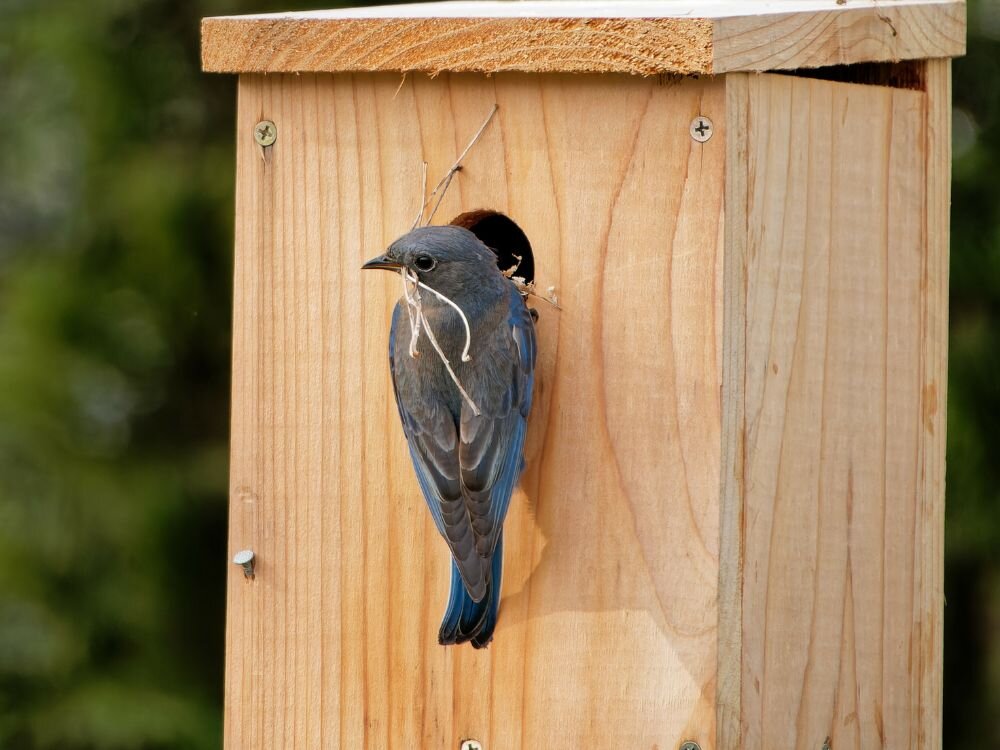
A backyard can be a busy place for birds, especially in the Pacific Northwest. From cool, damp mornings to long stretches of rain, birds are always looking for safe places to rest, nest, and get through the season. That’s where birdhouses and nest boxes come in.
Birdhouses vs. Nest Boxes – What’s the Difference?

Most people use the word “birdhouse” to describe any structure made for birds, whether it’s meant for nesting, shelter, or simply adding a bit of charm to the yard. Birdhouses can serve different purposes depending on how they’re built and where they’re placed.
A nest box is more specific. It’s a type of birdhouse designed for breeding and raising young. Details like entrance hole size, interior space, ventilation, and drainage are crucial when creating a nest box.
Choosing between the two really comes down to your goal. If you’re hoping to support birds as they raise chicks, you need a nest box. If you’re more interested in décor, hands-on learning, or seasonal interest in the yard, a birdhouse is the way to go.
Birdhouses
Birdhouses are commonly used as:
- Temporary shelter during cold, wet, or windy weather
- Overnight roosting spots, especially outside of nesting season
- Decorative or educational features that encourage interest in backyard birds
Some birds may occasionally step inside, while others may completely ignore it. This is typical and not a sign of a poorly set-up birdhouse.
For more about backyard birds, read Common Birds of the Northwest.
Materials for Birdhouses
Since birdhouses aren’t meant for nesting, material choice is more forgiving. However, designs that stay dry, avoid extreme heat, and feel protected from the elements are more likely to be used.
Common birdhouse materials are:
- Wood – It has a natural appearance and provides some insulation against cold and damp weather. It tends to blend well into outdoor spaces and is often more inviting as a short-term shelter.
- Metal – These are durable and withstand rain and wear well. They’re often chosen for their longevity or distinctive look. In sunnier spots, though, metal will warm up quickly.
- Decorative – Painted or decorative finishes are usually selected for appearance first. While they can add charm to a yard or garden, birds tend to use them less, especially if the design traps moisture or heat.
Where to Place Birdhouses
Placement is more flexible for birdhouses than it is for nest boxes. Here are some good general guidelines:
- Place birdhouses in a location protected from constant wind and heavy rain.
- Avoid spots with nonstop foot traffic or noise.
- Choose locations where birds already spend time, such as near trees, fences, or garden edges.
- Install the birdhouse at a height recommended for the species you hope to attract, since different birds prefer different elevations.
Some homeowners also place birdhouses with a purpose in mind. For example, bluebird houses are often positioned near gardens or open spaces since they feed heavily on insects. Thoughtful placement can support both the birds and natural insect control in your yard.
Predator Guards
Predator guards are not as critical for birdhouses since birds do not raise young inside. That said, mounting birdhouses out of easy reach and avoiding obvious climbing routes can help keep them safer and make the birdhouse more appealing.
Seasonal Care and Cleaning
Birdhouses benefit from occasional upkeep, especially in damp climates. A simple approach works well.
- Check birdhouses once or twice a year.
- Remove any debris or nesting material if it builds up.
- Let the interior dry out naturally.
Nesting Boxes

Nest boxes are built around how birds behave during nesting season. Many birds are selective when choosing a place to raise young, and for good reason. A well-designed box can help reduce stress, limit unwanted visitors, and give chicks a more comfortable start.
This usually means:
- Interior dimensions that allow adults to move safely without crowding.
- Entrance holes sized for specific species.
- Ventilation and drainage to handle damp conditions.
- Simple interiors, without perches or added decorations.
These features don’t need to be complicated. They just need to support how birds actually use the space for nesting.
Birds That Use Nest Boxes in the Pacific Northwest
Birds that use nest boxes are called “cavity-nesting birds,” and they don’t build open nests in trees or shrubs. Instead, they rely on enclosed spaces (like tree cavities or nest boxes) to raise their young.
Common PNW nest box users include:
- Black-capped Chickadee
- Chestnut-backed Chickadee
- House Wren
- Bewick’s Wren
- Western Bluebird
- Mountain Bluebird
- Tree Swallow
- Violet-green Swallow
- Red-breasted Nuthatch
- White-Breasted Nuthatch
- Downy Woodpecker
- Hairy Woodpecker
- Northern Flicker
In some areas, larger cavity nesters like the Western Screech-Owl may also use properly sized nest boxes. Because owls are predators, if you choose to put out a nest box for them, it’s best to place these boxes away from areas where you’re trying to attract smaller birds.
Each species looks for something a little different. A nest box that works well for a chickadee may not be as appealing to a bluebird. Additionally, not all birds use enclosed nest boxes. Some species, like the American Robin, prefer open platforms over fully enclosed boxes. These platform-style nest boxes still provide support and protection, but better match how those birds naturally nest.
This is why paying attention to species-specific details makes a difference.
Materials for Nest Boxes
Two materials commonly used for nest boxes:
- Wood insulates naturally and handles temperature swings well. This is why many successful nest boxes are made from simple, unfinished wood.
- Metal is durable and harder for predators to damage, but it works best when paired with good ventilation and shade. Open, breezy locations help prevent overheating.
Decorative materials tend to matter less for nesting boxes. Simpler designs with plain, unfinished materials handle moisture better and are less likely to trap heat, helping keep nesting conditions more stable.
Nest Box Hole Sizes and Dimensions

Floor space, entrance hole size, and mounting height all influence which birds can use a box and which ones cannot.
However, the entrance hole size is especially important. Openings that are too large can allow invasive or aggressive species (such as starlings and house sparrows) to access and destroy the nest. Proper sizing helps protect nesting birds and improves the chances of a successful brood.
For more detailed plans, see Cornell Lab’s NestWatch. However, here’s a quick species-by-species breakdown.
Chickadees (Black-capped and Chestnut-backed)
- Nesting habitat: Woodlands, forest edges, and wooded neighborhoods (especially coniferous areas for Chestnut-backed Chickadees)
- Entrance hole: 1 ⅛”
- Floor size: About 4" × 4”
- Inside depth: 8”
- Mounting height: 5–15 ft
- Attach to: Tree trunk or sturdy post
House Wren
- Nesting habitat: Open woodland, forest edges, and dense understory
- Entrance hole: 1"
- Floor size: About 4" × 4"
- Inside depth: 8”
- Mounting height: 5–10 ft
- Attach to: Tree trunk, fence post, or building at least 100 ft away from other nest boxes
Bewick’s Wren
- Nesting habitat: Gardens, forest edges, and dense understory (Pacific Wrens prefer more sheltered, wooded areas)
- Entrance hole: 1 1/8"
- Floor size: About 4" × 4"
- Inside depth: 8”
- Mounting height: 5–10 ft
- Attach to: Tree trunk, fence post, or building
Bluebirds (Western or Mountain)
- Nesting habitat: Open fields, meadows, pastureland, and forest edges
- Entrance hole: 1 1/2" (Western), 1 9/16” (Mountain); if House Sparrows become a problem, add a second entrance hole next to the other one so the Bluebirds can more easily defend their nest.
- Floor size: 5 1/2" × 5 1/2"
- Inside depth: 9”
- Mounting height: 4–6 ft
- Attach to: Post with predator guard
Swallows (Tree Swallow and Violet-green Swallow)
- Nesting habitat: Open areas near water, fields, and open woodlands
- Entrance hole: 1 3/8"
- Floor size: 5 1/2" × 5 1/2"
- Inside depth: 9”, add a fledgling ladder on the inside below the entrance
- Mounting height: 5-6 ft (Tree), 9-15 ft (Violet-green)
- Attach to: Post, pole, or building wall
Nuthatches (Red-breasted and White-breasted)
- Nesting habitat: Mixed and mature forests, wooded neighborhoods
- Entrance hole: 1 1/4"
- Floor size: 5 1/2" × 5 1/2", add 1” of wood shavings in the bottom
- Inside depth: 8”
- Mounting height: 5–20 ft (higher placement preferred for White-Breasted)
- Attach to: Tree trunk
Downy Woodpecker
- Nesting habitat: Mature forests, wooded areas, and suburban neighborhoods
- Entrance hole: 1 1/4"
- Floor size: 4" × 4", add 1-2” of wood shavings to the bottom
- Inside depth: 9”
- Mounting height: 6–20 ft
- Attach to: Tree trunk, tilt the box forward about 15 degrees to make it easier for fledglings to get out.
Hairy Woodpecker
- Nesting habitat: Mature forests, wooded areas, and suburban neighborhoods
- Entrance hole: 1 5/8" (Hairy)
- Floor size: 6" × 6"; add 1-2” of wood shavings to the bottom
- Inside depth: 12”
- Mounting height: 6–20 ft
- Attach to: Tree trunk, tilt the box forward about 15 degrees to make it easier for fledglings to get out.
Northern Flicker
- Nesting habitat: Open woodlands, forest edges, and parks
- Entrance hole: 2 1/2"
- Floor size: 7 1/4" × 7 1/4"
- Inside depth: 24”
- Mounting height: 6–12 ft
- Attach to: Tree trunk or large post
Where to Place Nest Boxes
Placement can have a bigger influence on nesting success than design or materials. For nest boxes:
- Face entrances away from prevailing wind and rain
- Avoid direct afternoon sun
- Space boxes far enough apart to reduce territorial tension
Mounting boxes on poles is often the easiest option. Poles make it simpler to add predator guards and handle seasonal cleaning.
General Spacing Guidance for Nest Boxes
Many cavity-nesting birds prefer a bit of personal space during nesting season. When boxes are placed too close together, birds may ignore them, compete for them, or abandon a site altogether.
As a starting point:
- Chickadees & nuthatches: About 20–30 feet apart usually works well.
- Wrens (house and Bewick’s): Can tolerate closer spacing, but they are assertive. House Wrens may destroy nests of nearby cavity nesters when taking over a nest site, so extra distance (100+ feet) helps reduce competition with other species.
- Bluebirds & swallows: Prefer more room, often 100 feet or more between boxes, depending on habitat.
- Woodpeckers (downy, hairy, flicker): Larger cavity nesters benefit from wider spacing, typically 50–100 feet or more.
- Owls (if included): Boxes should be placed well away from other nest boxes to avoid disturbance and predation concerns.
Predator Guards
Raccoons, snakes, domestic cats, predatory birds, and squirrels are all common visitors, and nest boxes can draw their attention. To help keep your nest boxes safe, consider adding:
- Pole baffles
- Noel guards that extend the entrance
- Entrance hole guards that prevent chewing or enlargement
When used together, these guards make nest boxes safer for nesting birds.
Seasonal Cleaning and Maintenance
Damp climates increase the need for routine care, so it’s important to clean nesting boxes to reduce parasites and mold. Plus, keeping them clean helps encourage birds to return the next breeding season.
A good cleaning routine* to follow is:
- Clean nest boxes in late summer or early fall.
- Remove old nesting material.
- Rinse with water or use a bird-specific cleaner.
- Let boxes dry thoroughly before closing.
(*Note: Wait until fledglings have fully left the nest box before cleaning.)
Support Local Backyard Birds

With the right setup, your backyard can become a place birds return to season after season.
Wilco Farm Store offers a wide selection of wild bird supplies designed for everyday backyard use. Whether you’re adding a little character to the yard or setting up a space for nesting birds, you’ll find options that fit your goals and Pacific Northwest conditions season after season.


Store Hours
Monday - Saturday 7am - 8pm, Sunday 9am - 6pm

For questions or help with online orders call: (888) 78-WILCO
Limited to stock on hand. Some items may vary from photos. Because of store size limitations or geography, some items featured may not be available in all stores but will be made available by special order during sale periods at advertised prices. All sale prices listed as “dollars off” or “% off” are discounted from our regular posted shelf price, not from discounts given with specialty, bulk or pallet pricing. Reseller and Drop-shippers must contact us for pre-approval to place orders with the intent to re-distribute.
© 2026, Wilco Farm Store