

Choosing the Right Heater for Your Barn or Workshop + Safety Tips
November 12, 2025
Hardware, Paint & Home
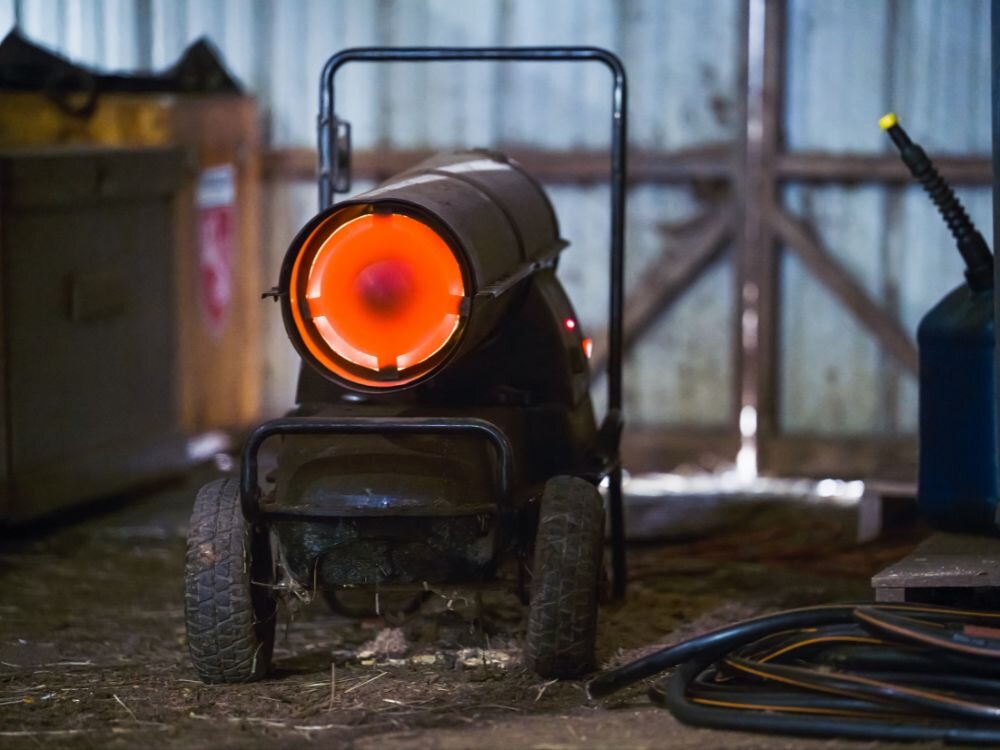
When the temperature drops, keeping your barn or workshop warm provides comfort and keeps your space usable. So the right heater makes all the difference. But before you plug in the first one you find, it’s worth taking a closer look at your space, power options, and a few safety details.
What to Consider Before Choosing a Heater

Before you pick out a heater for your barn or workshop, think about how the space is used and what kind of setup you already have. The right heater for a small, insulated workshop isn’t the same one you’d need for a barn.
Here’s what to look at before buying.
1. Size of the Space
A small workshop or tack room doesn’t need the same power as a large pole barn. If your heater is too small, it’ll run constantly and struggle to keep up. Too big, and you’ll waste energy and risk uneven heat.
Bigger spaces with high ceilings or open layouts take longer to warm up and may need multiple heaters or higher BTU output. A quick rule of thumb: the larger and taller your space, the more heating capacity you’ll need.
2. Insulation and Airflow
A well-insulated space retains heat better, which means your heater won’t have to work as hard. If your barn has gaps, drafts, or open doors, much of that heat will escape before it ever reaches you. So adding even simple insulation or sealing cracks will make a difference in comfort and efficiency.
Good airflow matters too. It spreads warmth evenly, reduces condensation, and helps prevent cold corners that can affect tools, supplies, or livestock.
3. Power Source Options
Heaters come in several types (like electric vs. fuel), and each one suits different needs.
The best option depends on what power sources are available where you are and how often you’ll be running it. Choosing the right power source keeps your heating consistent, cost-effective, and safe in the long term.
Types of Heaters for Barns and Workshops

Here are the most common options for barn and workshop heaters.
Electric Barn Heaters
Electric heaters are simple, reliable, and great for smaller, enclosed spaces. They’re especially handy if you’re working around animals since they don’t give off fumes or want something that runs clean and quiet.
Because they don’t burn fuel, electric heaters don’t need ventilation. This makes them a safe pick for workshops, garages, or tack rooms. Maintenance is also minimal: Simply plug it in and set your temperature.
Here are a few types of electric workshop heaters suited for different setups.
- 1. Portable utility heaters are sturdy and easy to move from one space to another.
- 2. #Ceramic heaters provide quick, even warmth with built-in safety shutoffs.
- 3. For a more permanent option, an in-wall fan heater provides consistent heat without taking up floor space.
An electric barn heater is ideal if you need steady, low-effort warmth for tools, projects, or livestock areas that stay mostly closed off from the elements.
Fuel-Burning Heaters
When you need powerful, reliable heat for big, drafty spaces, fuel-burning heaters get the job done.
Propane Heaters
Propane heaters are powerful, flexible, and great for heating large or drafty spaces like barns, garages, or workshops. They warm up quickly and deliver consistent heat even when the doors are open.
There are several types, including:
- 1. Tank-top propane heaters for quick, direct warmth in smaller spaces.
- 2. Convection propane heaters that heat in all directions for steady, even warmth.
- 3. Forced-air propane heaters that deliver fast, high-output heat for larger barns.
Just remember: Propane heaters need good ventilation and a carbon monoxide detector nearby for safe operation.
Kerosene Heaters
If propane isn’t available, kerosene heaters are another dependable choice. They’re rugged, efficient, and can produce serious heat output.
- 1. Convection kerosene models evenly warm an entire room.
- 2. Forced-air versions blow heated air across wide areas.
Kerosene heaters require careful fuel handling and should always be used in well-ventilated areas, but they’re tough performers in cold, outdoor, or semi-open environments.
Infrared Heaters
Infrared heaters work by directly warming objects and people, rather than heating the air first. That makes them perfect for spot-heating areas like workbenches, grooming stalls, or garage corners where you spend most of your time.
They’re a great choice for smaller enclosed spaces or as a supplement to your main heating system since these heaters are energy-efficient (saving on power costs) and heat up quickly.
Choosing the Right Heater for Your Space

Once you understand the different types of heaters, the next step is matching the right one to your space. Think about how big your barn or workshop is, how well it’s insulated, and how often you use it. The goal is to stay warm without wasting energy or overheating.
Here’s a simple way to decide:
- 1. Small, enclosed workshop → An electric or infrared heater is often enough. Both work quietly, heat up fast, and don’t need ventilation.
- 2. Large, open pole barn → Go with a propane or kerosene gas heater. These produce a lot more heat and handle cold air better, especially when doors are opening and closing throughout the day.
- 3. Partially insulated or mixed-use spaces → Consider combining a main heater with a radiant or spot heater to target cold areas without overdoing it.
Heater Comparison Guide
| Heater Type |
Small, enclosed barns or workshops
Electricity
Keep clear of water and flammable materials
Large or open spaces, like barns
Propane fuel
Propane fuelRequires ventilation and CO monitoring
Semi-open or areas without propane access
Kerosene fuel
Use in ventilated areas; handle fuel with care
Targeted zones or stalls
Electricity or propane
Surfaces can get hot, keep clearances in mind
Safety Tips for Using Barn and Workshop Heaters
A good heater can make winter chores a lot easier, but only if it’s used safely. Barns and workshops are full of things that can catch fire, from straw and sawdust to fuel and tools, so it’s worth taking a few extra precautions.
- 1. Keep flammable materials clear of the heater, like hay, feed bags, rags, and other flammable materials. Even small heaters throw off enough heat to start a fire if something’s too close.
- 2. Ensure proper ventilation for fuel-burning models. Propane and kerosene heaters build up carbon monoxide if your space isn’t ventilated. Crack a door or window and use a carbon monoxide detector if you’re running one indoors.
- 3. Never leave heaters unattended near animals or equipment. Always turn heaters off before leaving the barn or workshop, especially if livestock or pets are nearby. The same goes for heaters left running next to tools, cords, or machinery.
- 4. Regularly inspect cords, hoses, and connections before every season. Look for frayed cords, loose hoses, or cracked fittings.
- 5. Use heaters rated for agricultural or workshop environments, since not every heater is built for barn life. Check that yours is rated for the environment you’re using it in.
Stay Warm and Work Safely This Winter
A well-chosen heater, matched to your space size, insulation, and usage, can save energy, last longer, and keep you comfortable throughout the cold months.
Explore Wilco’s full selection of heaters to find the best fit for your space.


Store Hours
Monday - Saturday 7am - 8pm, Sunday 9am - 6pm

For questions or help with online orders call: (888) 78-WILCO
Limited to stock on hand. Some items may vary from photos. Because of store size limitations or geography, some items featured may not be available in all stores but will be made available by special order during sale periods at advertised prices. All sale prices listed as “dollars off” or “% off” are discounted from our regular posted shelf price, not from discounts given with specialty, bulk or pallet pricing. Reseller and Drop-shippers must contact us for pre-approval to place orders with the intent to re-distribute.
© 2026, Wilco Farm Store