

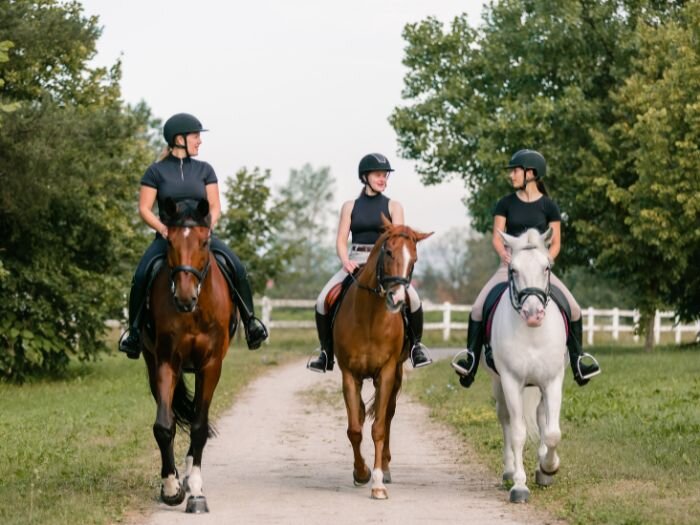
When people talk about horseback riding, they often imagine one of two classic styles: English or Western. From the saddle you sit in to how you hold the reins, each style has its history, gear, and way of working with a horse.
Whether new to horses or curious about switching things up, this guide breaks down the essential parts of English vs. Western horseback riding.

A Quick History of English and Western Horse Riding
When you see someone in tall boots and a fitted jacket trotting around an arena or someone swinging a rope from a deep-sitting saddle, you’re watching two riding styles that go way back. Both styles have deep roots in history, shaping how we ride, work, and compete with horses.
English Riding
English riding has its roots in Europe, especially in military training and classical horsemanship. Soldiers needed quick, agile horses that could handle jumps, tight maneuvers, and fast commands on the battlefield.
Over time, as the need for cavalry declined, this riding style evolved into the structured sports we see today, like show jumping, dressage, and eventing. These disciplines value precision, balance, and refined communication between horse and rider.
Western Riding
Western riding grew up on the open ranges of North America, where cowboys needed a saddle that was tough enough for long hours and rough cattle work. You’ll often see Western riders wearing gear made for both work and weather.
Western riding focuses on smoothness and independence instead of tightly controlled movements. Horses are trained to work with a loose rein, often responding to subtle shifts in body weight. This makes it easier for ranchers to multitask without micromanaging their horses.
Two Styles, Many Disciplines
What started as two different needs (war and ranch work) turned into a wide range of horse sports and traditions. Today, both styles are practiced by riders of all ages and skill levels, whether you're in a show ring or out on the trail.
Let’s look at how English and Western horseback riding differences show up in the gear, styles, and disciplines.

Saddle Showdown
English and Western saddles don’t just look different. They’re built for entirely different jobs.
English Saddles
English saddles are made for precision, agility, and speed. Traits that matter in the arena more than on the open range.
Features include:
- 1. No horn: Since English riding doesn’t involve ropes, there’s no need for one.
- 2. Flatter seat: This allows riders to move their bodies forward, back, or up out of the saddle, which is essential for jumping and fast-paced events.
- 3. Shorter, separate flaps: These provide closer contact with the horse, which helps riders give more refined cues.
English saddles are like a sports car: light, sleek, and built for performance.
Western Saddles
Western saddles were designed with working cowboys in mind. These saddles are heavier and wider, built to keep both horse and rider comfortable for hours.
Here’s what makes them stand out:
- 1. Saddle horn: This sturdy front knob is where a rider anchors their rope when roping cattle.
- 2. Deep seat: It helps keep you balanced and secure, especially on rough terrain.
- 3. Fenders and stirrups: These hang from a single piece of leather, giving your legs more coverage and stability.
Western saddles are ideal for trail riding, ranch work, rodeos, and Western sports like barrel racing. They’re built for durability, comfort, and utility.

Riding Techniques and Rider Position
Western and English styles have their own approach to communication, balance, and movement in the saddle. From how you hold the reins to how you sit in the saddle, these differences shape how you connect with your horse.
Reins and Hand Position
One of the first things you’ll notice is how riders hold the reins.
- English riders use direct rein control, which means they steer by applying light pressure to each rein separately. This is almost always done with both hands for more precise, independent control.
- Western riders often steer using neck reining, guiding the horse by gently laying the reins against one side of the neck. It’s usually done with one hand, leaving the other free to open a gate or toss a rope.
Western riding gives the horse more freedom to make decisions, which is especially useful on the trail or in cattle work. English riding asks for more rider input, which is essential in timed or technical sports like jumping or dressage.
Seat and Leg Position
Rider posture plays a significant role in both styles, but the feel is different.
- In English riding, your seat is more upright and centered, with your legs underneath you. You’ll rely more on your thighs, knees, and calves to cue the horse.
- In Western riding, you sit deeper and more relaxed, with your feet slightly forward and your weight sunk into the saddle. This helps you stay balanced during quick stops, turns, or long rides.
Think of it like this: English riders often ride like they’re ready to spring into action. Western riders settle in like they’re staying awhile.
Posting the Trot
Posting means rising slightly out of the saddle in rhythm with the horse’s trot to make the ride smoother. It’s common in English riding, especially in hunt seat and dressage.
Western riders usually sit the trot, riding the movement with a looser, deeper seat. Posting might happen in some cases (like fast trail riding or Western pleasure), but it’s not the norm.
Riding Attire and Footwear
Western and English riders each have their own signature style, and both come from tradition and purpose.
English Attire
English riding clothes lean into tradition, especially in the show ring. They’re designed for mobility, close contact with the horse, and a clean, polished look.
- Breeches or jodhpurs: These stretchy, snug-fitting pants give you a full range of motion and prevent chafing.
- Tall boots: Usually made of leather, they protect the rider’s legs and offer stability in the stirrups.
- Show jackets and shirts: In competitions, riders wear fitted jackets over white or pastel show shirts.
- Helmets: A well-fitted riding helmet is standard in English disciplines and often required for schooling and showing.
You’ll see more relaxed versions outside the arena: polo shirts, paddock boots, or half chaps for everyday rides.
Western Attire
Western riding gear traces back to life on the range. Every piece is made to handle dust, sun, and long hours on horseback.
- Jeans: Tough enough for barn chores, flexible enough to ride in. Boot-cut styles fit easily over cowboy boots.
- Button-down shirts: Long sleeves protect against sun and brush. Plus, they look sharp at rodeos or casual events.
- Cowboy boots: High shafts protect your legs, and the angled heel keeps your foot from sliding through the stirrup.
- Hats: A wide-brimmed cowboy hat provides shade and a bit of flair, but some riders opt for a helmet for rougher rides or training.

Tack and Gear
Tack is everything you put on your horse to ride, and just like the saddles and clothing, it varies a lot between Western and English styles.
Bridles and Bits
English and Western bridles serve the same basic function (steering and communication), but they’re built and used differently.
- English bridles have a more structured look. Most include a noseband (cavesson) and use snaffle bits, which apply direct pressure and work best with two-handed rein control. English riders might also use double bridles or bits with more refined functions in some disciplines.
- Western bridles are often simpler, with no noseband, decorative leatherwork, or silver accents. They usually have split reins paired with curb bits that use leverage to guide the horse with one hand.
Each setup reflects the riding style: Western riding relies on subtle neck reining and a looser feel, while English riding calls for more precise cues and closer contact.
Numnahs vs. Saddle Pads
Both styles use a layer between the saddle and the horse’s back, but they go about it differently.
- English riders use numnahs or saddle cloths, which are thinner and shaped to match the saddle. These help reduce friction and keep the saddle in place, especially during active movements like jumping.
- Western riders use saddle pads, which are thick, square, and often made from felt or wool. These pads provide cushion and absorb sweat during long rides.
Stirrups, Cinches, Girths, and Breastplates
There’s more to tack than just saddles and bridles. Let’s break down some of the key supporting pieces.
Stirrups
- English stirrups are narrower, lightweight, and designed for quick release in case of a fall.
- Western stirrups are wide and often made of wood or metal, covered in leather. They’re great for long rides and stability.
Cinches vs. Girths
- English saddles use a girth (usually made of leather, elastic, or fabric) that attaches to short straps (called billets) tucked beneath the saddle flap.
- Western saddles use a cinch to secure the saddle. It’s often wider and made from mohair or synthetic fibers.
Breastplates
- In English riding, breastplates help keep the saddle from sliding (especially in jumping or cross-country) and are slim and styled to match the tack.
- In Western riding, breast collars help keep the saddle in place during fast turns or steep climbs and are typically wider.
Events and Riding Disciplines
Western and English riding both offer a wide range of sports and events. Each discipline highlights different strengths. Some focus on agility and control, others on speed or precision.
English Disciplines
English sports emphasize control, balance, and athleticism. Many of these events are based on military traditions and fox hunting.
A few English riding events are:
- • Dressage
- • Show jumping
- • Eventing
- • Fox hunting
These events showcase the strong connection between horse and rider, and a good deal of athleticism from both. Learn more in our English Equestrian Sports Guide.
Western Disciplines
Western events often reflect the skills needed for ranch work, like handling cattle, making tight turns, or reacting quickly.
Here are a few of the western riding disciplines:
- • Barrel Racing
- • Cutting
- • Roping
- • Reining (sometimes called “Western dressage”)
All of these require a steady seat, smart horses, and tack that won’t quit. Check out our Western Horse Sports Guide for more on these and other Western riding sports.

Is English or Western Riding Better for Beginners?
Western is often seen as more beginner-friendly. The saddle is larger and more secure, and the riding style is more laid-back. It’s a great way to build confidence, especially if you’re out on the trail.
That said, English riding teaches strong fundamentals. You'll develop great posture, balance, and rein control, giving you a head start in many equestrian sports. It’s a little more physically demanding at first, especially when learning to post the trot or ride with close contact.
Why Not Try Both?
You don’t have to stick with one forever. Trying both styles can make you a better, more well-rounded rider. You might love the freedom of Western riding and the challenge of jumping a course in English tack.
So grab the reins, try something new, and see which style fits you best. The trail (or arena) is wide open!
Two Styles, One Passion
At the end of the ride, English and Western horseback riding both offer rewarding ways to connect with your horse.
No matter which style you choose, having the right equipment makes all the difference. Visit Wilco Farm Store or shop online for a full range of feed, grooming tools, and supplies – and get ready to saddle up with confidence.


Store Hours
Monday to Saturday:
8 a.m. to 8 p.m.
Sunday: 9 a.m. to 6 p.m.

For questions or help with online orders call: (888) 78-WILCO
Limited to stock on hand. Some items may vary from photos. Because of store size limitations or geography, some items featured may not be available in all stores but will be made available by special order during sale periods at advertised prices. All sale prices listed as “dollars off” or “% off” are discounted from our regular posted shelf price, not from discounts given with specialty, bulk or pallet pricing. Reseller and Drop-shippers must contact us for pre-approval to place orders with the intent to re-distribute.
© 2025, Wilco Farm Store