Shopping at Pasco - Monday - Saturday 7am - 8pm, Sunday 9am - 6pm
PascoMonday - Saturday 7am - 8pm, Sunday 9am - 6pm



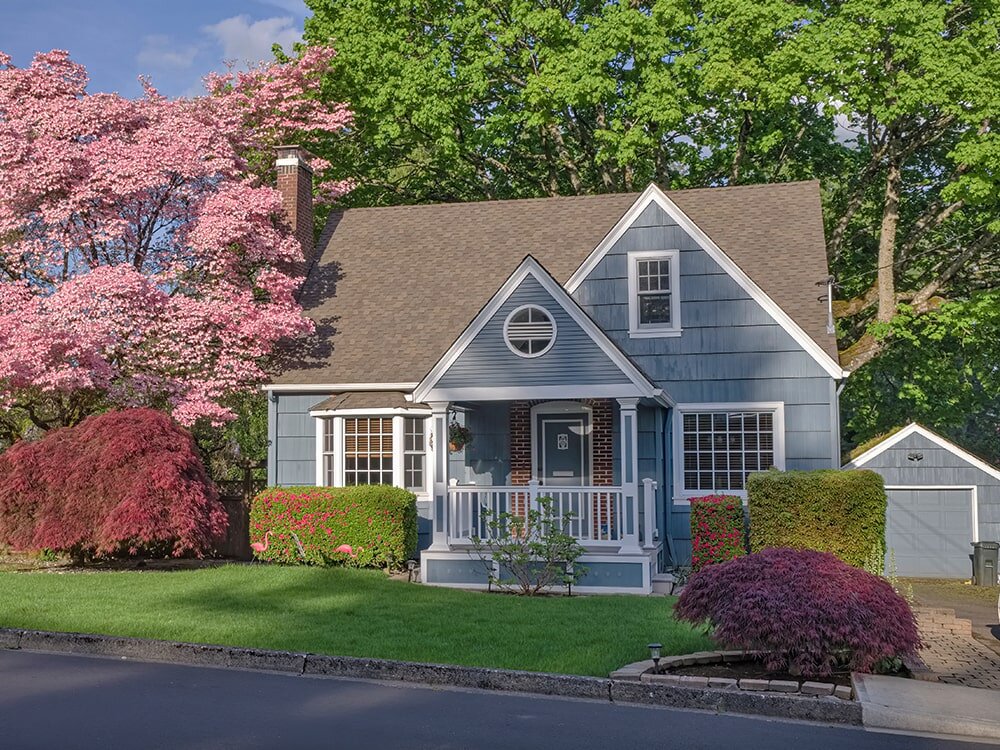
When you think about the words water-wise and lawn, the instinct isn’t to put them together. Everyone has heard that lawns use up nearly half the community water during the summer. And it’s true. Lawns take a lot of water. In fact, the average lawn needs 1-2” of water per week. That’s a lot. But there are a few things you can do to create a more environmentally aware lawn. And it doesn’t mean ripping it all out…although that is an option we’re going to explore.
 While lawns are sometimes looked at as less eco-friendly, there are actually quite a few benefits that come with a lawn.
While lawns are sometimes looked at as less eco-friendly, there are actually quite a few benefits that come with a lawn.
- Lawns create soil stability so soil doesn’t erode.
- Lawns are great natural filters for dust, pollutants, and particulates from the air.
- They cool an area and reduce noise pollution.
- And of course, they help with CO2 production.
Use fertilizers and herbicides correctly. This seems like a no-brainer, but it is easy to think that if a little works well, a lot will work better. This is not the case. There is only so much fertilizer a plant can absorb. And dead is dead. You can’t make the plants “more” dead. So read the labels and follow the directions. A balanced fertilizer is great for established lawns (try Wilco’s 16-16-16 all purpose fertilizer). A broad spectrum selective herbicide will kill most broadleaf invaders (Crossbow Herbicide Weed & Bush Killer is a great option). A couple of tips to keep in mind for both: apply in the cool part of the day to avoid evaporation; avoid spraying in the wind and keep the sprayer close to the ground; kill weeds first, then fertilize (don’t need to feed the weeds).
 If you aren’t ready to give up your lawn, but you want to lower your water bill, consider the following. If you have a 20x40’ lawn and you trim just four feet around it for a perennial garden, you’ve gone from watering an 800 sq. ft. lawn to a 576 sq. ft. lawn. And if you add a four foot pathway between the lawn and the garden bed, you drop the lawn to 476 sq. ft. That’s nearly half the size of your original lawn and you’d never notice. Still plenty of room to lay out a blanket for a summer picnic.
If you’re not sure you want a lawn, ask yourself this. Is the only time you step on your lawn when you get out there to mow it? If that’s the case, you might be in the market for an alternative. And there are some cool ones.
Tapestry lawns are the new trend. As the name implies, they are a woven area of groundcovers and low growing flowers that take the place of a lawn. They create wonderful biodiversity, use less water, and need fewer chemicals (because you aren’t trying to limit it to a single plant variety). The tapestry lawn blooms in cycles and is meant to be an ever-changing garden. Mowing it three or four times a year at the highest setting will keep it maintained for the space you’ve chosen. The only real downfall to a tapestry lawn is you can’t walk on it. But remember the question above. How much are you really walking on your lawn in the first place?
Going even further, you could look at ways to reinvent your yard with a mixture of plants and hardscape. This approach eliminates the traditional lawn completely and opts for a more diverse collection of plants.
Plan first, plant second. Draw your yard. Start with hardscape – things that don’t grow. Creating a pathway with pea gravel or decomposed granite helps to break up larger areas and give them more interest. With a beautiful light brown color and a very slow decomposition rate, hazelnuts shells are certainly another option for pathways or groundcover. Add boulders, rock walls, planters, water features, or pavers to create interest in your yard.
If you aren’t ready to give up your lawn, but you want to lower your water bill, consider the following. If you have a 20x40’ lawn and you trim just four feet around it for a perennial garden, you’ve gone from watering an 800 sq. ft. lawn to a 576 sq. ft. lawn. And if you add a four foot pathway between the lawn and the garden bed, you drop the lawn to 476 sq. ft. That’s nearly half the size of your original lawn and you’d never notice. Still plenty of room to lay out a blanket for a summer picnic.
If you’re not sure you want a lawn, ask yourself this. Is the only time you step on your lawn when you get out there to mow it? If that’s the case, you might be in the market for an alternative. And there are some cool ones.
Tapestry lawns are the new trend. As the name implies, they are a woven area of groundcovers and low growing flowers that take the place of a lawn. They create wonderful biodiversity, use less water, and need fewer chemicals (because you aren’t trying to limit it to a single plant variety). The tapestry lawn blooms in cycles and is meant to be an ever-changing garden. Mowing it three or four times a year at the highest setting will keep it maintained for the space you’ve chosen. The only real downfall to a tapestry lawn is you can’t walk on it. But remember the question above. How much are you really walking on your lawn in the first place?
Going even further, you could look at ways to reinvent your yard with a mixture of plants and hardscape. This approach eliminates the traditional lawn completely and opts for a more diverse collection of plants.
Plan first, plant second. Draw your yard. Start with hardscape – things that don’t grow. Creating a pathway with pea gravel or decomposed granite helps to break up larger areas and give them more interest. With a beautiful light brown color and a very slow decomposition rate, hazelnuts shells are certainly another option for pathways or groundcover. Add boulders, rock walls, planters, water features, or pavers to create interest in your yard.Note the areas with shade or sun. This will help dictate what kinds of plants you choose. Group the plants together based on their water and exposure needs. Some great choices for a sunny yard include lavender, thyme, ornamental grasses, succulents, and juniper. Many of these plants grow with little to know care above watering. Some easy shade plants include hostas, Oregon grape, bleeding hearts, ferns, and heucheras.
Because part of the draw to a “non-lawn” yard is less water consumption, keep in mind that native species are the best choice for the new garden beds. If you have the option, drip irrigation does a wonderful job of targeting plants without wasting water (Raindrip offers a great selection). Otherwise, you can water each section based on needs. Don’t be afraid to use groundcovers in some areas and taller perennials in larger areas. The idea is not to create more work, but to diversify.
Those who love their lawns go to great lengths to care for them. They mow and fertilize and trim and water. Heck, there are even companies in some hot climates that will come out and literally spray paint your lawn green (it’s a real thing…look it up). And it’s not necessary to get rid of lawns completely. But there are alternatives. And if those alternatives fit the needs of your yard, it might be time to plan something new.
We would love to see your lush lawn, use #mywilcolife on Facebook, Twitter, or Instagram and tag Wilco Stores.
ROBYN ROGERS, THE AUTHOR OF THIS BLOG IS LOCATED ON THE KITSAP PENINSULA IN WASHINGTON AND HER ADVICE IS CONSISTENT WITH THE CLIMATE THERE.

Orders
Services
About
Your Pasco Wilco Store

Store Hours
Monday - Saturday 7am - 8pm, Sunday 9am - 6pm

Need Help?
For questions or help with online orders call: (888) 78-WILCO
Limited to stock on hand. Some items may vary from photos. Because of store size limitations or geography, some items featured may not be available in all stores but will be made available by special order during sale periods at advertised prices. All sale prices listed as “dollars off” or “% off” are discounted from our regular posted shelf price, not from discounts given with specialty, bulk or pallet pricing. Reseller and Drop-shippers must contact us for pre-approval to place orders with the intent to re-distribute.
© 2026, Wilco Farm Store