


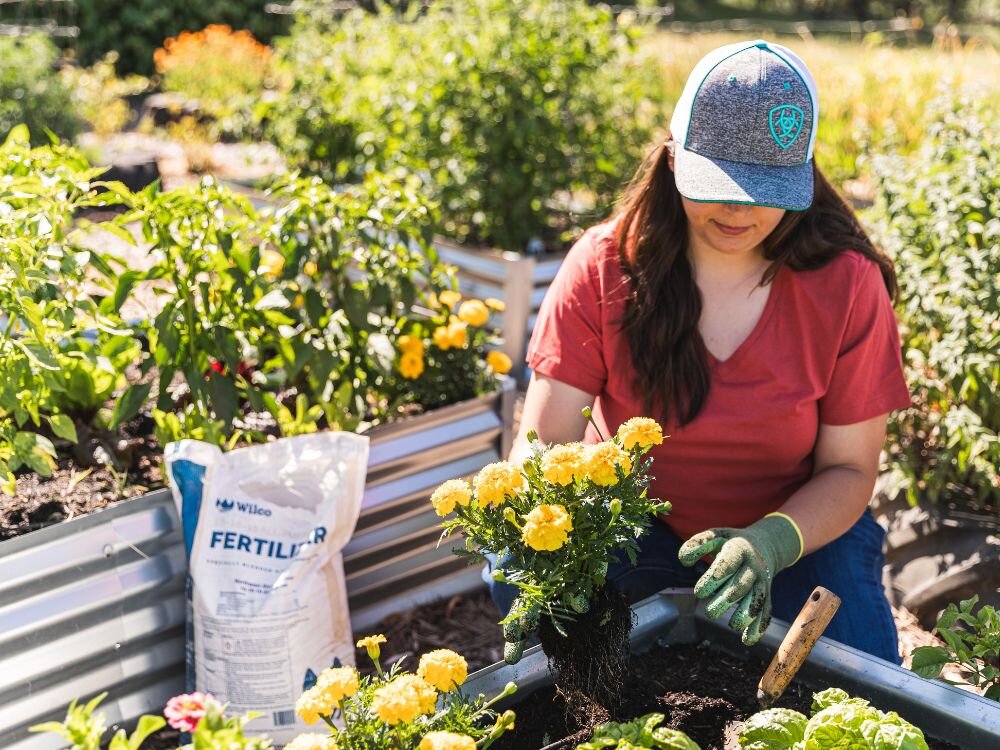
Refreshing raised beds means giving your soil a reset without tearing everything out. Instead of replacing all the dirt, you’re improving what’s already there so it can grow better plants this season.
Here’s what that involves:
- Rebuilding soil health without removing all existing soil.
- Replenishing organic matter, nutrients, and depth.
- Correcting compaction and drainage issues.
Done right, refreshing raised bed soil sets you up for healthier plants and easier gardening. And the first step is simple: take a close look at the soil you already have.
Step 1: Check Soil Health Before Adding Anything

Soil usually tells you what it needs. Dig in and look for:
- Compacted or crusted soil. If the surface feels hard or cracks when dry, roots will struggle to grow. Compaction also makes it harder for water and air to move through the bed.
- Poor drainage. Standing water or soggy soil hours after watering is a red flag. This often means the soil structure has broken down or settled too much.
- Few earthworms or microbial activity. Healthy soil usually has signs of life. If you’re not seeing worms or a crumbly texture, the soil likely needs more organic matter.
Simple At-Home Tests
These quick checks help confirm what you saw in your soil.
Texture Test
- Grab a handful of damp soil and squeeze it.
- If it forms a tight ball and stays that way, it’s too compacted. Good soil should crumble when you poke it.
Drainage Test
- Dig a small hole about 6 inches deep and fill it with water.
- If it hasn’t drained within a few hours, drainage needs improvement.
Nutrients and pH Testing (Optional)
This step isn’t required, but it can help you make smarter choices before adding amendments. A basic soil test can show if nutrients are out of balance or if pH might affect plant growth.
If you want quick insight, a simple pH meter can give you a general reading right in the bed. For a more detailed look at nutrient levels, something like the Wilco Premium Soil Test Kit can help you understand what’s actually missing from your soil.
Step 2: Measure Soil Depth

Rain, watering, and root growth all compress the soil over time. What started as a full bed can end up several inches lower after a season or two. That loss reduces root space and affects the movement of water and nutrients through the bed.
Before adding anything else, measure from the soil surface to the bottom of the bed. Topping off the soil can solve more problems than adding fertilizer alone.
Ideal Soil Depth for Common Raised Bed Plants
Most plants grown in raised beds need more depth than people realize. Root space affects plant size, water retention, and overall production.
- Leafy greens and herbs: about 6–8 inches
- Strawberries and shallow-rooted flowers: 6–8 inches
- Peppers, bush beans, cucumbers, and squash: 10–12 inches
- Carrots, beets, onions, and other root crops: 12 inches or more
- Tomatoes, potatoes, melons, and larger fruiting plants: 12–18 inches
If your bed doesn’t meet those ranges, plants may stay smaller, dry out faster, or struggle during heat spells.
Step 3: Rebuild Organic Matter

Organic matter is the backbone of healthy soil. When you refresh raised beds, this is the step that brings structure, nutrients, and life back into the mix.
Best Organic Matter for Raised Beds
These options are reliable, easy to work with, and safe for most gardens. If you’re unsure which to use, compost is always a safe starting point.
- Finished compost is the go-to choice for most beds. It improves soil structure, slowly feeds plants, and supports earthworms and microbes. Compost also helps balance both sandy and compacted soil.
- Aged manure adds nutrients and organic matter, but it must be fully aged or composted since fresh manure can burn plants and cause uneven growth. Used correctly, it’s great for heavy feeders like corn or squash.
- Leaf mold or compost blends improve moisture retention and soil texture. Compost blends that mix plant-based material with minerals are especially useful if your soil drains too fast or feels lifeless.
How Much to Add
- General depth guidelines: Add about 1–2 inches of organic matter across the surface of the bed. You’ll mix and water it after adding any amendments in the next step.
- Adjusting based on what you’re growing: Heavy feeders like tomatoes, melons, and squash benefit from the full 2 inches. Lighter crops, such as herbs or greens, usually do fine with closer to 1 inch.
Step 4: Amend for Nutrients
Once soil depth and organic matter are in good shape, nutrients are the fine-tuning step. This is where refreshing raised bed soil goes from “better” to “ready to grow.”
Common Fertilizers and What They Do
Think of fertilizers as targeted helpers. You’re not feeding randomly but matching nutrients to plant needs.
- Nitrogen (N): Nitrogen fuels leafy growth for greens like lettuce, spinach, and kale benefit from higher nitrogen levels. Compost provides a steady base, but some beds may need extra support from blood meal, feather meal, or fish-based fertilizers.
- Phosphorus (P): Phosphorus supports strong roots. Root crops like carrots, beets, and potatoes benefit from adequate phosphorus levels. Bone meal or rock phosphate are common options.
- Potassium (K): Potassium supports blooms, fruit development, and overall plant strength. Fruiting crops like tomatoes, peppers, and squash often need a steady supply of potassium to perform well.
- Trace minerals: Small amounts of calcium, magnesium, and sulfur help plants use nutrients more efficiently. Garden lime, gypsum, or mineral blends can help if soil tests or past performance suggest a shortage.
Choosing and Applying Amendments
Once you know what your soil needs, think about how and when to apply it.
- Consider timing and form. Liquid amendments provide a quick boost during active growth or bloom. Dry or slow-release amendments feed steadily over time and support longer-term soil fertility.
- Always combine with organic matter. Compost improves soil structure and helps nutrients stay available instead of washing away.
Shop Fertilizer & Crop Nutrients↗
Avoid Over-Amending
Too many nutrients can lock plants out of what they need or cause fast growth with weak stems and poor yields. Over-amended soil can also stress beneficial microbes.
If plants grew well last season, you may need very little. However, if growth was weak or uneven, small adjustments go a long way. A basic soil test can help, but even careful observation is often enough.
When you refresh raised beds, aim for balance so nutrients support healthy growth rather than overwhelming it.
Step 5: Mix, Level, and Let the Bed Settle

Once everything’s added, the final step is getting the bed ready to plant.
- Incorporate new material without overworking the soil. Use a garden fork or hand tool to gently mix new material into the top few inches. You’re blending the soil, not tilling. Overworking the soil can break down structure and disturb beneficial organisms.
- Water the bed lightly after mixing to help the new soil, organic matter, and amendments settle. This allows soil to fill gaps, activate microbes, and show you where low spots may need a little more.
When Beds Are Ready for Planting
If the soil is moist, level, and no longer sinking when watered, it’s usually ready to plant. If you only added compost or topped off soil, you can plant the same day or shortly after.
However, if you added concentrated or fast-acting amendments, it’s best to wait a day or two and water lightly so nutrients can blend evenly into the soil.
Why Full Soil Replacement Is Rarely Necessary
Complete replacement usually makes sense only if the soil is contaminated, badly compacted beyond repair, or mixed incorrectly from the start. For most gardens, that’s not the case.
Good soil improves with age. Each season adds organic matter, root channels, and microbial activity. Dumping it all out removes years of progress and replaces living soil with something that needs time to recover.
Think of raised bed soil like a cast-iron skillet. You don’t replace it every year, but you take care of it every time you use it.
- Yearly refreshes restore nutrients, depth, and structure.
- Long-term care builds better soil over time with compost and smart planting.
When you refresh raised beds regularly, complete soil replacement becomes the exception. That saves money, effort, and keeps your garden improving season after season.
So if you’re seeing these signs, your bed likely doesn’t need a full reset:
- Plants grow steadily and produce well.
- Soil drains but doesn’t dry out too fast.
- The texture is loose and crumbly, not hard or sticky.
- You notice earthworms or other signs of soil life.
Even if yields dipped a bit last season, that usually points to low nutrient levels or reduced depth and not to failed soil.
Common Mistakes When Refreshing Raised Beds
1. Adding only fertilizer without organic matter.
Fertilizer feeds plants. Organic matter feeds the soil. If you skip compost and add nutrients alone, soil structure doesn’t improve. Water still drains poorly, roots still struggle, and nutrients don’t stick around long. Organic matter is what makes fertilizer actually work.
2. Ignoring soil depth.
Low soil depth limits roots, no matter how good the soil is. Beds that have settled several inches won’t hold moisture well and dry out fast. Before adding nutrients, make sure there’s enough soil volume for roots to grow.
3. Compacting soil while mixing.
Pressing down, stepping in beds, or overworking the soil can undo your progress. Compacted soil restricts airflow and drainage. Mix gently, use hand tools, and let water do the settling.
4. Skipping rest time before planting.
Some amendments need time to blend and balance. Planting immediately after heavy additions stresses young plants. If you can, give the bed a few days and a light watering before planting.
A Simple Reset Goes a Long Way

Refreshing raised beds isn’t about starting from scratch. It’s about paying attention to what your soil actually needs.
And the best part? Good soil gets better over time. Each season you refresh raised bed soil the right way, you’re building a stronger structure, healthier microbes, and more productive harvests.
If you’re ready to get your beds back in shape, stop by your local Wilco Farm Store or shop online for compost, soil amendments, and other garden basics. Whether you’re topping off a single bed or refreshing the whole garden, you’ll find what you need to grow with confidence this season.


Store Hours
Monday - Saturday 7am - 8pm, Sunday 9am - 6pm

For questions or help with online orders call: (888) 78-WILCO
Limited to stock on hand. Some items may vary from photos. Because of store size limitations or geography, some items featured may not be available in all stores but will be made available by special order during sale periods at advertised prices. All sale prices listed as “dollars off” or “% off” are discounted from our regular posted shelf price, not from discounts given with specialty, bulk or pallet pricing. Reseller and Drop-shippers must contact us for pre-approval to place orders with the intent to re-distribute.
© 2026, Wilco Farm Store