


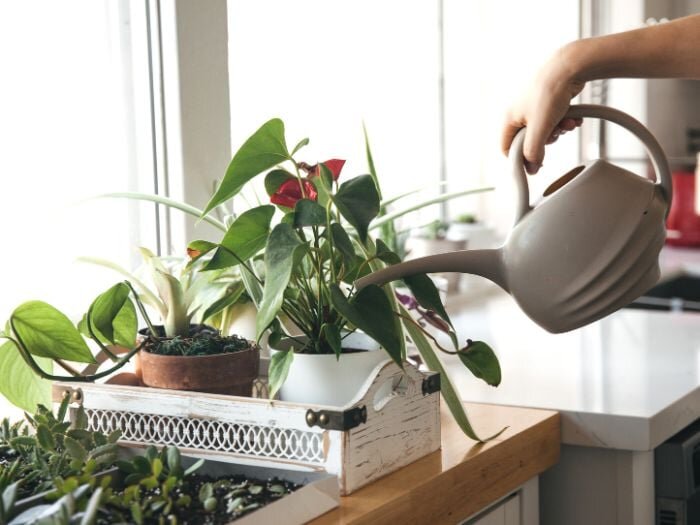
It’s easy to overwater your houseplants without even realizing it. One day you’re giving them a little extra love, and the next, you wonder why the leaves are turning yellow. Here’s what usually causes overwatering:
- 1. You’re watering too often. A lot of folks think indoor plants need water every day or every other day, but most don’t.
- 2. There’s no drainage. Water has nowhere to go if your pot doesn’t have a drainage hole. It just sits at the bottom, soaking the roots.
- 3. You’re guessing what your plant needs. Different plants, different rules. A tropical fern and a desert cactus don’t need the same amount of water.
- 4. The seasons have changed. Plants slow down in the winter. That means they drink less and don’t need water as often. But if you keep watering like it’s summer, the soil stays too wet for too long.
So, to avoid overwatering, let’s look at how to tell if your plant has had too much to drink and what you can do to help it bounce back.
How to Tell If a Plant Is Overwatered

Sometimes it’s not obvious what’s wrong with your houseplant. Is it thirsty? Drowning? Just being dramatic? The good news is that there are a few clear signs of overwatering.
Yellow Leaves That Fall Off
One or two yellow leaves now and then isn’t a big deal. But seeing several leaves turning yellow and dropping (especially from the bottom of the plant) could be a red flag. Overwatering cuts off the roots' oxygen, making the plant drop its leaves to survive.
Wilting, But the Soil Feels Wet
This one throws a lot of people off. We’re used to thinking wilt = dry soil. But if your indoor plant looks limp and droopy while the soil is still wet, it’s probably overwatered. The roots can’t do their job when drowning in soggy soil, so the plant wilts just like it would if it were bone-dry.
Mushy Stems or Root Rot
Give the base of the plant a gentle pinch. If the stem feels soft, squishy, or starts to break down, the roots are likely rotting below. Root rot is caused by sitting in wet soil for too long. Unfortunately, you might not see it until the plant is already in bad shape. But catching mushy stems early still gives you a chance to save them.
Moldy Soil or Fungus Gnats
Check the top of the soil. Do you see a white, fuzzy layer? That’s mold, and it thrives in wet conditions. Fungus gnats (tiny black flies hovering around your plant) also love moist soil. Both are signs that you’re watering too much or too often.
Is It Overwatered or Underwatered?
Here’s the trick to telling the difference:
- Overwatered plants: yellowing leaves, soft stems, wet soil, and sometimes mold or gnats.
- Underwatered plants: crispy or brown leaf edges, dry soil, and stiff, crunchy leaves.
If the soil is wet and the plant is drooping, it's probably overwatered. If the soil is dry and the leaves are crunchy, it needs a drink.
Can Overwatered Plants Recover on Their Own?

Sometimes, yes. But it depends on the plant, how soaked the roots are, and how quickly you catch the problem. Some houseplants bounce back after a little rest and dry soil. Others need a full rescue mission. Here’s how to tell what your plant might need.
Root Health Is Key
If they’re firm and pale, your plant has a solid chance. But if they’re mushy, dark, or smell like compost, that’s root rot, and your plant won’t recover on its own. In that case, you need to trim the damaged roots and repot them in fresh, dry soil. If you have powdered cinnamon, add it to the cut root tips. It can help prevent infection while the roots heal.
Good Pots and Soil Matter
A struggling plant will have a much easier time recovering if it’s in the right setup:
- Pots with drainage holes help extra water escape.
- Fast-draining soil keeps roots from sitting in moisture too long.
- Aeration materials like perlite or pumice keep things light and breathable.
If your plant’s current setup isn’t cutting it, this might be the time to switch to something better.
When to Re-Pot or Propagate
If your plant still looks sad after the soil has dried out or if the root system is shot, it might be time to:
- Re-pot: Take the plant out, remove soggy soil and damaged roots, and replant it in fresh soil in a drainage-friendly container.
- Propagate: If the roots are done for but the stems still have some life, snip a few healthy cuttings and start over in water or new soil. Many common houseplants like pothos, philodendron, and peperomia root quickly this way.
How long does it take for an overwatered indoor plant to recover?
It depends on the plant and how bad the overwatering was. If you catch the problem early (before root rot sets in), your plant might perk up a few days after the soil dries out. But if the roots are damaged and you’ve had to trim and repot, recovery can take weeks or even months. Here’s a rough timeline:
- Mild overwatering (droopy leaves, wet soil, no root rot): 3–7 days
- Moderate damage (yellowing leaves, soft stems): 1–3 weeks
- Severe overwatering (root rot, mushy base, full repot needed): 1–2+ months
During recovery, keep the plant in bright, indirect light and avoid fertilizing until you see new growth. Patience is key. Plants don’t bounce back overnight, but with the proper care, most will recover just fine.
What to Do If You Overwater a Plant

So you gave your houseplant a little too much love. It happens. The good news is, you can still fix it if you act fast. Here’s what to do.
1. Dump the extra water.
If there’s standing water in the saucer under your pot, dump it out. If the pot doesn’t have drainage holes, tip it gently to the side to let as much water drain out as possible (without spilling the soil).
2. Let the soil breathe.
Move your plant to a spot with good airflow and bright, indirect light. Don’t water it again until the top few inches of soil are dry. This might take a few days. Avoid direct sun, though. Too much heat will stress the plant even more. To help speed things up:
- Remove any decorative moss or stones covering the soil (they trap moisture).
- To improve air circulation, prop up the pot slightly with a small wood block or saucer underneath.
3. Trim off the damage.
Check the leaves and stems. If you see mushy, yellow, or blackened areas, snip them off with clean scissors. Removing the damage helps the plant redirect its energy into healthy growth. If the plant is in really bad shape, gently slide it out of the pot to inspect the roots. Healthy roots are white or light tan. If they’re dark, mushy, or smell rotten, trim those sections and repot the plant in fresh, dry soil.
4. Dry out waterlogged soil.
Sometimes the soil itself is the problem. If it holds too much moisture or takes forever to dry, here are a few ways to fix it:
- 1. Paper towel method: Stick a few folded paper towels or newspaper strips along the inside edges of the pot. They’ll help soak up some moisture without disturbing the roots.
- 2. Repot with fresh soil: If the indoor plant is struggling, remove it, shake off as much wet soil as possible, and replant in dry, well-draining soil. Choose a mix designed for your plant type.
- 3. Add aeration materials: Next time you repot, mix in perlite, pumice, or orchid bark. These improve drainage and prevent soggy roots down the road.
How to Stop Overwatering Houseplants Going Forward
Once you’ve rescued your plant (or promised to do better next time), the real trick is keeping overwatering from happening again. Luckily, you can keep your plants happy and hydrated with a few simple changes.
Make a Watering Schedule (But Stay Flexible)
Start by figuring out what each plant actually needs. A cactus and a fern won’t follow the same watering routine. Then, make a loose schedule based on that information. Use it as a reminder, not a strict rule. The goal is to check if the plant needs water, not just water it automatically.
Check the Soil First
The easiest tool? Your finger! Stick it about an inch or two into the soil. If it still feels damp, wait a day or two. You can also try a moisture meter. These inexpensive tools give you a quick read of how wet the soil is near the roots.
For plants in bigger pots, a wooden chopstick works too. Stick it in, pull it out, and check for damp soil sticking to the end.
Use Pots with Drainage Holes
If your pot can’t drain, you’re setting yourself up for trouble. Water collects at the bottom, and even if the top looks dry, the roots could be drowning. Switch to a pot with drainage holes, or double-pot your plant. Keep it in a plastic nursery pot (with holes) and set that inside a decorative container. That way, you get style and function.
Pick the Right Soil Mix
Regular potting mix works for most houseplants, but some need extra care.
- Succulents and cacti like fast-draining soil with sand or perlite mixed in.
- Tropical plants often prefer a fluffier mix with peat moss or coco coir.
- Orchids and some aroids need chunky soil with bark or sphagnum moss to keep air around their roots.
Not sure what to use? Check the plant tag or ask for help at Wilco Farm Store. We’ve got pre-mixed soils for just about every plant personality.
Change Things Up With the Seasons
Watering once a week in July might be fine, but come January, you may only need to water once every two or three weeks since plants slow down in winter. Pay attention to how quickly the soil dries out and adjust from there. Your watering routine should follow your plant’s pace, not the calendar.
Overwatering Solved

Overwatering isn’t about how much water you give at one time. It’s about how often you water and whether the plant can drain and dry out properly in between. It all comes down to knowing your indoor plant, watching your watering habits, and making a few smart choices about soil, pots, and tools. Need help choosing the right soil, pot, or moisture meter? Wilco Farm Store has everything you need to keep your houseplants thriving. Your plants will thank you (probably with new leaves).


Store Hours
Monday to Saturday:
8 a.m. to 8 p.m.
Sunday: 9 a.m. to 6 p.m.

For questions or help with online orders call: (888) 78-WILCO
Limited to stock on hand. Some items may vary from photos. Because of store size limitations or geography, some items featured may not be available in all stores but will be made available by special order during sale periods at advertised prices. All sale prices listed as “dollars off” or “% off” are discounted from our regular posted shelf price, not from discounts given with specialty, bulk or pallet pricing. Reseller and Drop-shippers must contact us for pre-approval to place orders with the intent to re-distribute.
© 2025, Wilco Farm Store