


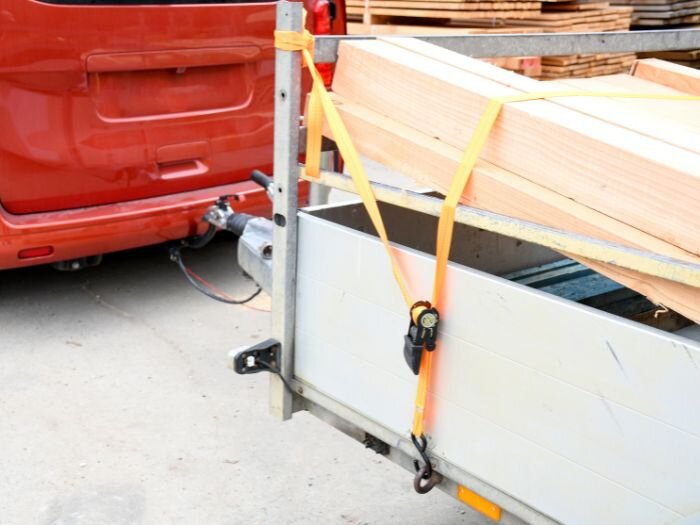
Whether hauling hay bales down a gravel road or tying down fencing panels for a trip across town, keeping your load secure is more than just good practice. It’s basic safety. A loose tarp or slipping strap can quickly turn into a roadside hazard. So let’s look at what you need to get your load locked in tight and right.

Choosing the Right Tarp for the Job
Picking the wrong tarp will leave your load exposed, flapping in the wind, or worse, flying off mid-trip.
Common Types of Tarps
- • Cargo tarps are made to cover loads in trucks and trailers. They’re shaped and reinforced to stay put at highway speeds.
- • Heavy-duty tarps are thick, durable, and usually waterproof. They are great for protecting tools, hay, firewood, or equipment from the elements.
- • Tarpaulin covers are a catch-all term. These come in various weights and sizes, from lightweight poly tarps to tough canvas.
Each type has its place, and what you’re hauling matters as much as where and how far you’re going when choosing a tarp.
What to Look for in a Tarp
Before you grab the nearest tarp, take a minute to check for:
- 1. Size – The tarp must fully cover your load, with enough overhang to secure around the edges. Bigger is better than coming up short.
- 2. Material – Poly tarps are suitable for lightweight loads and short trips. Canvas or vinyl works better for heavy or sharp items.
- 3. Weather resistance – Got rain in the forecast? Are UV rays beating down? Look for waterproof or UV-resistant tarps so they don’t rip, fade, or leak mid-haul.
Tip: Grommets (those metal eyelets) help you tie the tarp down evenly without tearing it. The more grommets along the edge, the easier to cinch things tight.
When a Tarp Works and When It Doesn’t
A tarp keeps dust, wind, rain, and sun off your cargo. It also stops smaller items from shifting or flying out. But it’s not a magic shield.
A tarp alone won’t hold your load in place. It needs backup (like tie-down straps or load binders) to actually keep things secure.
Load Straps and Tie-Down Options
Once your tarp is in place, it’s time to lock everything down, and that’s where your tie-down tools come in. Here’s a quick rundown of gear used to secure a load, starting with the tools you’ll reach for most often.
Most Common Tie-Downs
- • Bungee cords are fast and easy to use. They are good for keeping tarps from flapping, but not strong enough for heavy cargo.
- • Cam buckle straps are great for medium-weight loads. You pull the strap through the buckle and it locks into place (no cranking required).
- • Ratchet straps are heavy-duty and built for big jobs. The ratcheting mechanism helps you crank down tight and stay tight.
Other Options You Might Use
- • Load straps are a general term that covers many types of tie-downs. They’re usually made of polyester webbing that resists stretching and weather damage.
- • Adjustable tie-downs are straps that you tighten to fit different load sizes. Some come with quick-release buckles for easy use.
- • Load binders are often used with chains for really heavy cargo. They are more common in commercial hauling or when securing large farm equipment.
Each has its place. The trick is matching the tool to the task and knowing how much weight it can safely handle (that’s your load rating).
What Is a Load Rating?
Every strap has a Working Load Limit (WLL). That’s the maximum weight it can safely hold during use. You’ll also see a Break Strength listed (that’s the point where it’ll snap). But don’t count on that number. Always go by the WLL.
Comparing Everyday Tie-Down Tools
When securing everyday loads, these three tie-downs are the go-to options: bungee cords, cam buckles, and ratchet straps. Each has its own strengths, and knowing when to use which one will make your haul safer and smoother. Here’s how they stack up:
Light loads, quick trips
Medium loads, easy adjustments
Heavy loads, long hauls
Elastic stretch
Manual pull and lock
Mechanical ratchet
Low
Moderate
High
Low
Lower than ratchets
Yes – can damage soft items
Easiest
Quick and user-friendly
More effort, but most secure
Yes, for light coverage
Yes, for light to midweight tarp coverage
Yes, for complete cargo security
Pro tip: Don’t rely on bungees alone to secure a full load. They’re great for keeping a tarp from flapping, but not strong enough for a real cargo hold.
A mix of tie-downs often works best. For example, you might use cam buckle straps to secure the tarp edges and ratchet straps to anchor the heavy parts of the load underneath.

How to Secure a Load Step-by-Step
Whether hauling tools or fencing, a few simple steps will make the difference between a safe trip and a roadside mess. Here’s how to do it right.
1. Distribute the weight evenly.
- • Place the heaviest items low and centered between your trailer axles or truck wheels.
- • Spread out the weight so one side isn’t heavier than the other.
- • Avoid stacking too high or leaning items against tarp-covered edges. They’ll shift when you hit the brakes.
2. Inspect and organize your cargo.
- • Stack items neatly to reduce movement and wind drag.
- • Place smaller, lighter pieces in bins or tuck them between heavier items to keep them from flying loose.
- • Look for broken pallets, loose boards, or cracked containers that might shift or collapse in transit.
3. Choose the right tarp and tie-downs.
- • Use a heavy-duty or cargo tarp to cover sharp edges, tools, or anything that will be transported long distances.
- • Select tie-downs that match your cargo’s size and weight. Need strong hold? Go for ratchet straps. Just keeping a tarp in place? Bungees or cam buckles might be fine.
- • Every strap or chain should have a clearly marked working load limit (WLL). Make sure it’s rated high enough for the load you're hauling.
4. Use a cross-pattern tie-down technique.
- • Run tie-downs diagonally across your load, creating a crisscross or X-pattern. This helps hold things in place from multiple angles.
- • Anchor straps to solid points. Never just hook to the tarp or flimsy rails.
- • Use edge protectors or softener pads if you're strapping over sharp or delicate gear.
5. Once everything’s in place: tighten, check tension, and test.
- • Tighten each strap until it’s snug but not crushing your cargo. Give a firm tug to double-check the hold.
- • Walk around the load and look for loose ends, slack, or misaligned straps.
- • Test it. Gently shake the load. Nothing should shift. If it does, tighten again or add another tie-down.
Don’t Forget the Flag
Requirements can vary by state, so be sure to check your local transportation regulations to stay compliant and keep your load visible to other drivers.
For example, many states require a red or orange flag if your cargo extends more than 4 feet past the rear of your truck or trailer. At night, flags are typically replaced with red lights or reflectors to maintain visibility.
It’s a small safety step, but an important one that keeps your load legal and visible on the road.
Tips for Tie Down Safety
Here’s how to ensure your tie-downs do their job every time.
How Many Tie-Downs Do You Need?
There’s a simple rule of thumb: one tie-down for every 10 feet of cargo, plus at least two tie-downs per item (no matter the length).
Hauling something short but heavy, like a riding mower? You still need at least two straps, one at the front and one at the back. Long items like lumber or pipe might need three or four, depending on the weight and how they’re stacked.
More is better, especially if you’re hitting the highway or rough gravel roads.
Avoid Common Tie-Down Mistakes
- 1. Overtightening – Ratchet straps are strong, but too much tension can crush soft cargo, dent metal, or snap weaker tie-down points. Tighten just until secure.
- 2. Strap abrasion—Straps rubbing against sharp edges or rough surfaces will wear out quickly. Use corner protectors, an old towel, or a feed sack to soften the contact.
- 3. Using damaged equipment – Frayed webbing, bent hooks, and rusted ratchets can all fail when you need them most. If it looks worn, don’t risk it. Replace it.
Check Your Mirrors and Sightlines
Once the load’s secure, hop in the cab and adjust your mirrors:
- 1. Make sure you have a clear line of sight down both sides of your truck or trailer.
- 2. Look for blind spots caused by taller or wider cargo.
- 3. If your load blocks your rearview mirror, rely on your side mirrors and drive accordingly.
When to Stop and Recheck
Even the best setup can shift after a few miles, especially on bumpy roads or during long hauls. Plan to stop and check your load:
- 1. After the first 5–10 miles – This is when straps settle and tarps stretch.
- 2. Every 50–100 miles on long trips – Especially if you're hauling heavy equipment or driving through changing weather.
- 3. After sharp turns, sudden stops, or rough terrain – These jostle things loose even if they seemed rock-solid at the start.

Safety Starts with a Secure Load
Make load securement a habit, not an afterthought.
And when you need gear that holds up to hard work, stop by your local Wilco or shop online. From heavy-duty tarps to ratchet straps that mean business, we have the tools to help you haul confidently.


Store Hours
Monday to Saturday:
8 a.m. to 8 p.m.
Sunday: 9 a.m. to 6 p.m.

For questions or help with online orders call: (888) 78-WILCO
Limited to stock on hand. Some items may vary from photos. Because of store size limitations or geography, some items featured may not be available in all stores but will be made available by special order during sale periods at advertised prices. All sale prices listed as “dollars off” or “% off” are discounted from our regular posted shelf price, not from discounts given with specialty, bulk or pallet pricing. Reseller and Drop-shippers must contact us for pre-approval to place orders with the intent to re-distribute.
© 2025, Wilco Farm Store