


|
This information is from the point of view of a home canner and not endorsed by a state extension agency. To assure the latest and safest information, always check recipes and processes with a state extension site prior to use. |
 There is something that you need to be conscious of when you are canning food - botulism. Botulism is bad. Really bad. It is a bacteria that lives on lots of things. It grows spores to protect itself. We come into contact with it all the time. We even eat it. But under certain circumstances, botulism spores grow and create toxins. And unfortunately, many of the environments it loves to grow in are created when canning.
- Low or no oxygen.
- Low acid.
- Low moisture.
- Use fresh, clean produce.
- Use clean, intact jars and lids.
- Follow the recipe. And process the jars for the recommended time and temperature or pressure (I’ll explain pressure canning in a minute).

Let’s break down the rules a bit more.
- Use fresh, clean produce. It makes sense. The better the ingredients, the better the product. Make sure to cut out bruises or spots. Root vegetables and tomatoes need to be peeled because most of the bacteria lives on the skin.
- Use clean, intact jars and lids.Check jars for chips in the rim and use new lids to ensure a good seal. Washing lids with warm, soapy water and rinsing completely will keep things safe. Wipe the rims before placing the lids. Use clean (not rusty) rings, finger tight. The less dirt, the better. This is good cooking practice but is essential for canning.
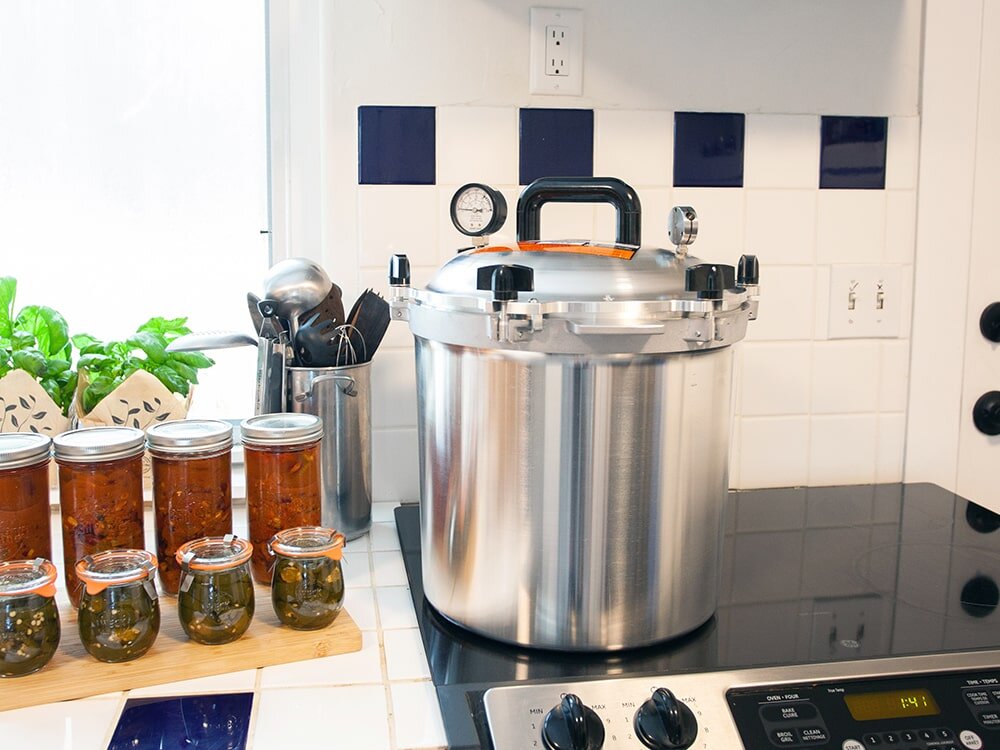
 An aside about processing the jars. There are two ways to process – hot water bath canning and pressure canning. A hot water bath canning set up is made of a large pot with a wire rack in the bottom. Hot water bath canning, as the name implies, is submerging the jars in hot water – specifically boiling water. Pressure canning uses a pot with a fitted, locking lid and a pressure gauge. Jars are placed inside on a rack with a small amount of water, the lid is locked, and pressure builds up in the form of steam. Watching the gauge, you can adjust the temperature on the stove to maintain the right pressure. Finally, just because it says “canning steamer” on your multi-use pot doesn’t mean it’s safe for canning. Don’t take the chance. Do it right or don’t do it at all.
For more information on protecting yourself and your family from botulism, click here.I didn’t intend this article to deter you from canning. In fact, it’s something I love to do each year. It fills my cupboards with summertime. I encourage you to learn how to can. It is incredibly satisfying. Just remember to ALWAYS follow the rules. Look for my next blog post, where we get into the step-by-step instructions for canning.
|
This information is from the point of view of a home canner and not endorsed by a state extension agency. To assure the latest and safest information, always check recipes and processes with a state extension site prior to use. |
We would love to see your canning projects, use #mywilcolife on Facebook, Twitter, or Instagram and tag Wilco Stores.
ROBYN ROGERS, THE AUTHOR OF THIS BLOG IS LOCATED ON THE KITSAP PENINSULA IN WASHINGTON AND HER ADVICE IS CONSISTENT WITH THE CLIMATE THERE.


Store Hours
Monday - Saturday 7am - 8pm, Sunday 9am - 6pm

For questions or help with online orders call: (888) 78-WILCO
Limited to stock on hand. Some items may vary from photos. Because of store size limitations or geography, some items featured may not be available in all stores but will be made available by special order during sale periods at advertised prices. All sale prices listed as “dollars off” or “% off” are discounted from our regular posted shelf price, not from discounts given with specialty, bulk or pallet pricing. Reseller and Drop-shippers must contact us for pre-approval to place orders with the intent to re-distribute.
© 2026, Wilco Farm Store