


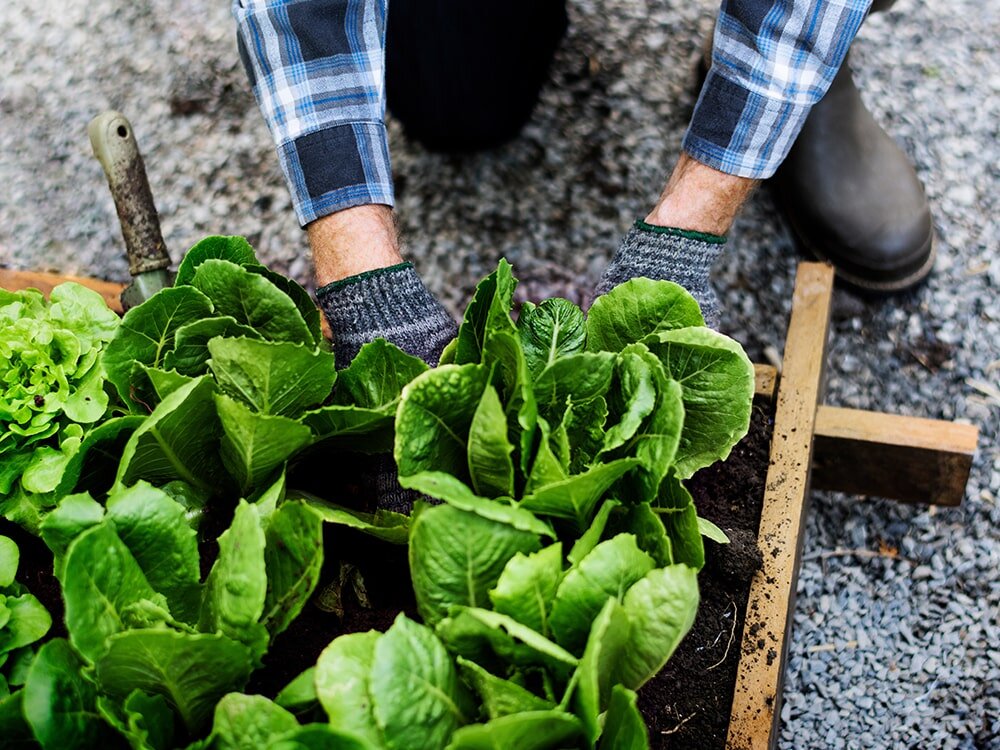
There are many reasons why people grow their own vegetables and the two reasons that I hear most often are that the vegetables can be harvested just before use so they are very fresh, and the second reason is that gardeners what to have some control over what substances might have been used on store bought vegetables. Growing your own, it is in your control.
 Growing vegetables in a home and/or community garden is often more labor intensive than expected. This is especially true for novice gardeners. Gardening is more than just sowing seeds or setting out transplants and expecting they will magically produce a crop, with no blemishes of course!
No garden is going to be 100% pest free, but we can often maintain a manageable control level if we are observant at the very beginning. For a beginning gardener, or even an experienced one, a good tactic is to talk with neighbors that have gardens and learn what problems they have had and how they have overcome them.
Growing vegetables in a home and/or community garden is often more labor intensive than expected. This is especially true for novice gardeners. Gardening is more than just sowing seeds or setting out transplants and expecting they will magically produce a crop, with no blemishes of course!
No garden is going to be 100% pest free, but we can often maintain a manageable control level if we are observant at the very beginning. For a beginning gardener, or even an experienced one, a good tactic is to talk with neighbors that have gardens and learn what problems they have had and how they have overcome them.
 With Wilco Stores scattered throughout the west, pest issues will vary depending on the particular area. Plus, there are many factors and microclimates within just a neighborhood that can have some influence on the pests we might see. Think of a shady and moist area and chances are it will be a home to slugs and snails.
Growing vegetables in a home and/or community garden is often more labor intensive than expected. This is especially true for novice gardeners. Gardening is more than just sowing seeds or setting out transplants and expecting they will magically produce a crop, with no blemishes of course!
No garden is going to be 100% pest free, but we can often maintain a manageable control level if we are observant at the very beginning. For a beginning gardener, or even an experienced one, a good tactic is to talk with neighbors that have gardens and learn what problems they have had and how they have overcome them.
With Wilco Stores scattered throughout the west, pest issues will vary depending on the particular area. Plus, there are many factors and microclimates within just a neighborhood that can have some influence on the pests we might see. Think of a shady and moist area and chances are it will be a home to slugs and snails.A healthy plant is less likely to be attacked by a pest than an unhealthy one. A healthy plant is going to need certain nutrients from the soil to perform its best. Knowing what nutrients might be lacking in the soil can be determined by getting a soil test and making additions as necessary.

Slugs & Snails
In the Pacific Northwest, especially on the western slope of the Cascades, slugs will probably be the number one problem. This is especially true for new seedlings that are emerging from the soil and for newly planted transplants. There are many types of baits available, granular, pellet, and liquid. Be sure to check the label to be certain that the product has been approved for use in vegetable gardens. For best control, apply in the evening on damp soil. An option to use instead of baits is a copper tape barrier. This can be especially effective in a raised bed where the tape can be adhered to the bed and create a barrier that slugs will usually not crawl over. Physically removing slugs is another option but not for the squeamish. Add some household ammonia to a bucket of water and wearing gloves, physically remove the slugs and drop them in the bucket. I have a neighbor that uses this method in the spring with a goal of 100 slugs per night!
Wild Birds
Birds can also be a problem especially on new seedlings and a physical barrier might be needed. A frame with poultry netting over it will usually work. Once plants are established, this netting can be removed.Moles & Voles
Moles can create havoc in a newly tilled garden. For raised beds, use a physical barrier such as chicken wire, galvanized wire mesh or a similar material to prevent moles from getting into the bed. In the garden, (non-raised beds), there are many mole traps available.
Aphids
The aphid is an insect pest that will be found in almost every garden at some time during the spring. In small numbers, aphids can usually be controlled naturally, many small birds will feed on them, ladybug larvae will eat them, and even spraying plants with a jet stream of water to knock them off will often be effective. In large numbers and when damage is observed, neem oil is an effective organic approved spray.Gardeners will discover that most plants are quite resilient to minor damage. Don’t be discouraged by early spring garden pests. There is no question that gardening can be a challenge but by being ever the watchdog, you can be the winner!
We would love to see your garden growing, use #mywilcolife on Facebook, Twitter, or Instagram and tag Wilco Stores.
Mike’s garden is located in Oregon’s Willamette Valley and his advice is consistent with the mild climate there. His opinions of what works for his garden and backyard. Always read labels of products before using them. Your Wilco team is available if you have any questions specific to your area.
We would love to see your garden growing, use #mywilcolife on Facebook, Twitter, or Instagram and tag Wilco Stores.

Orders
Services
About
Your Wilco Store

Store Hours
Monday to Saturday:
8 AM to 7 PM
Sunday: 9 AM to 6 PM

Need Help?
For questions or help with online orders call: (888) 78-WILCO
Limited to stock on hand. Some items may vary from photos. Because of store size limitations or geography, some items featured may not be available in all stores but will be made available by special order during sale periods at advertised prices. All sale prices listed as “dollars off” or “% off” are discounted from our regular posted shelf price, not from discounts given with specialty, bulk or pallet pricing. Reseller and Drop-shippers must contact us for pre-approval to place orders with the intent to re-distribute.
© 2026, Wilco Farm Store