


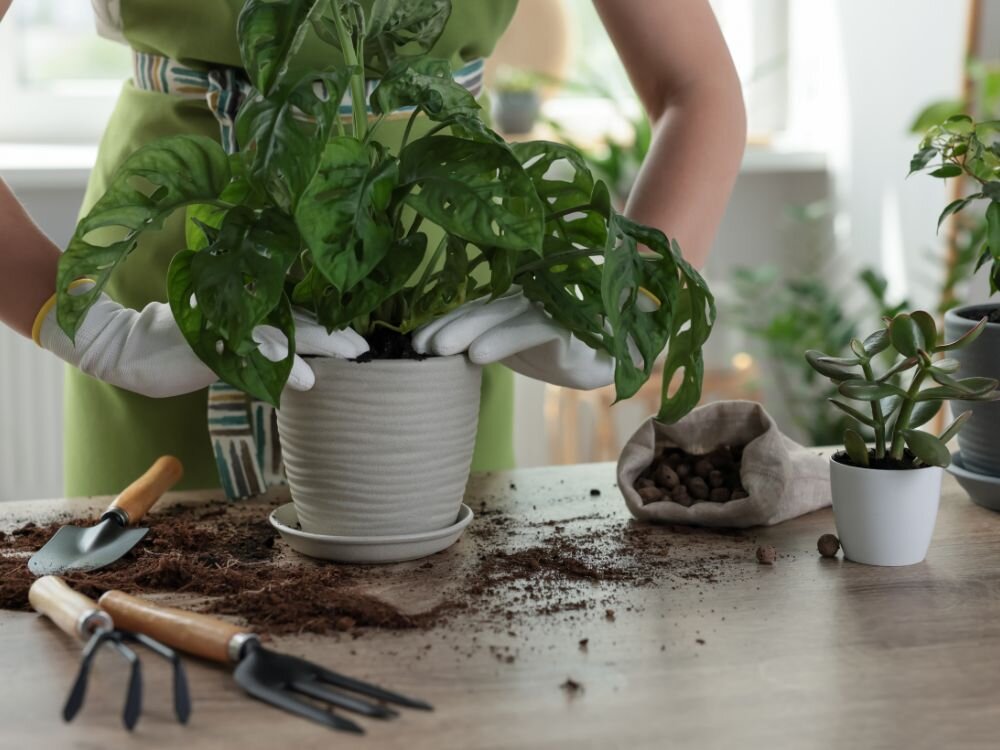
Over time, soil breaks down and roots run out of space. Repotting indoor plants provides them with a fresh start by improving drainage, adding essential nutrients, and creating space for new growth.
What Does It Mean to Repot a Houseplant?

Repotting means moving a plant into fresh soil, a new container, or both. It’s a regular part of indoor plant care, and not a sign your plant is struggling.
When Should You Repot Indoor Plants?
Most houseplants should be repotted every 1–2 years, but timing matters more than the calendar.
If you notice one or more of these signs, it’s time to repot your plant:
- Roots growing out of drainage holes. This means the roots have run out of space inside the pot.
- Water runs straight through the pot. Soil that drains too fast often means roots have taken over.
- Slow or stalled growth. Even with good light and water, crowded roots limit plant growth.
- Soil dries out unusually fast. Less soil means less moisture stays in the pot between waterings.
- Outgrown its shape or is crowding itself. Plants that produce offshoots can become packed in their pots, leaving little room for roots or new growth.
How Often Different Houseplants Need Repotting
There’s no one-size-fits-all schedule. How often you repot houseplants depends on how fast they grow and what kind of environment they prefer.
Fast Growers vs. Slow Growers
- Fast-growing plants (like pothos, spider plants, and philodendrons) often need repotting every 12–18 months. They fill pots quickly and use up nutrients faster.
- Slow-growing plants (like snake plants, ZZ plants, and many dracaenas) can go 2–3 years between repotting. They’re happy taking their time.
Tropical Plants vs. Succulents
- Tropical plants like soil that stays lightly and consistently moist. Repotting every 1–2 years helps refresh nutrients and supports healthy root expansion.
- Succulents and cacti grow slowly and like tighter spaces. Repotting every 2–3 years is often enough, as long as the drainage remains good.
Plants That Like Being Slightly Root-Bound
Some houseplants actually perform better with snug roots, like Peace lilies, African violets, and Hoyas. Being slightly root-bound can encourage flowering and more controlled growth.
If the plant looks healthy and water behavior hasn’t changed, there’s no rush to move it.
Best Time of Year to Repot
Spring and early summer are the best times to repot most indoor plants. During these months, plants are actively growing, which helps them recover faster after being moved.
But if your plant really needs repotting, you can do it at other times of the year. Just expect a slower bounce-back during seasons like winter (when growth naturally slows).
Choosing the Right Pot and Soil

Sometimes repotting means upgrading to a slightly larger container for an overgrown plant, and other times it’s about replacing tired, compacted soil that no longer drains or holds nutrients the way it should.
How to Pick the Right Pot Size
Bigger isn’t better here. Most houseplants only need a small upgrade.
- Size up just 1–2 inches in diameter. This gives roots room to grow without overwhelming them.
- Avoid oversized pots. Too much extra soil holds excess moisture, which raises the risk of root rot.
Also, make sure the pot has drainage holes. Good drainage is one of the easiest ways to keep indoor plants healthy.
Understanding Potting Soil Types
Not all potting soil works the same way, and matching the soil to your plant is more important than brand names.
- General-purpose potting mix – Works well for most common houseplants and everyday indoor plant care.
- Drainage-focused mixes for succulents and cacti – These dry faster and help prevent soggy roots.
- Moisture-retaining mixes for tropical plants – Designed to hold water a bit longer, which helps plants that like consistent moisture.
How to Repot a Houseplant

Repotting doesn’t have to be a big production. If you’ve got the right pot, the right soil, and a few minutes of patience, you’re in good shape.
Step 1: Prepare Your Plant and Supplies
- Water lightly beforehand. Do this a few hours before you start (or the day before). Slightly damp soil holds together better than bone-dry soil, allowing the root ball to slide out more cleanly.
- Gather your supplies. Set everything out so you’re not hunting for tools mid-repot.
Supplies:
- A clean pot (new or reused, sized appropriately for your plant)
- Potting mix
- A small scoop or trowel
- A tray, towel, or newspaper to catch soil
- Clean scissors or pruners (for trimming dead roots if needed)
Step 2: Remove the Plant and Loosen Roots
- Tip and slide the plant out. Hold the plant close to the soil line, turn the pot on its side, and ease it out. If it’s stuck, tap the sides of the pot or squeeze it (for plastic pots). Do this gently and try not to yank the stem.
- Loosen circling roots without tearing. If roots are wrapped around the bottom like spaghetti, use your fingers to gently tease them apart. You’re helping roots grow outward into fresh soil instead of continuing to circle. If the root ball is very tight, lightly rough up the outer layer (think “fluff,” not “rip”).
Step 3: Replant and Backfill with Fresh Soil
- Keep the plant at the same depth. Place it so the base of the stem sits where it did before. Burying it too deeply will lead to stem rot, and setting it too high will expose the roots.
- Fill evenly and press lightly. Add fresh soil around the sides, turning the pot as you go so it fills evenly. Press down gently to remove large air pockets, but don’t pack it too tightly. Roots like soil that’s settled, not squished.
Step 4: Water and Settle the Soil
- Water thoroughly. Water until you see it flowing out of the drainage holes. That tells you the soil is fully hydrated and settling around the roots.
- Let excess water drain completely. Don’t let the pot sit in standing water. Empty the saucer after a few minutes to prevent the roots from soaking in the water.
Check out How to Stop Overwatering Your Houseplants to avoid giving your plant too much water once it’s settled.
Your plant might look a little unimpressed for a day or two, but once it adjusts, fresh soil and better root space usually mean steadier growth.
What to Do After Repotting

Once repotting is done, the goal is to let your plant settle in.
- Put the plant back in indirect light. This helps it recover without added stress. Skip direct sun for a few days, even if the plant usually enjoys it.
- Hold off on fertilizer. Fresh potting soil already contains nutrients. Fertilizing right away will overwhelm roots that are still adjusting.
- Watch for mild transplant shock. A little drooping or slowed growth is normal for a week or two. That’s just the plant redirecting energy to the roots for recovery.
Repot With Confidence
A healthy root system sets the foundation for everything above the soil: strong leaves, growth, and fewer health issues. Most of the time, plants simply need a little more space and fresh soil to continue growing strong.
Visit your local Wilco Farm Store or shop online for all your indoor plant repotting supplies.
For more information on houseplants, read:


Store Hours
Monday - Saturday 7am - 8pm, Sunday 9am - 6pm

For questions or help with online orders call: (888) 78-WILCO
Limited to stock on hand. Some items may vary from photos. Because of store size limitations or geography, some items featured may not be available in all stores but will be made available by special order during sale periods at advertised prices. All sale prices listed as “dollars off” or “% off” are discounted from our regular posted shelf price, not from discounts given with specialty, bulk or pallet pricing. Reseller and Drop-shippers must contact us for pre-approval to place orders with the intent to re-distribute.
© 2026, Wilco Farm Store