


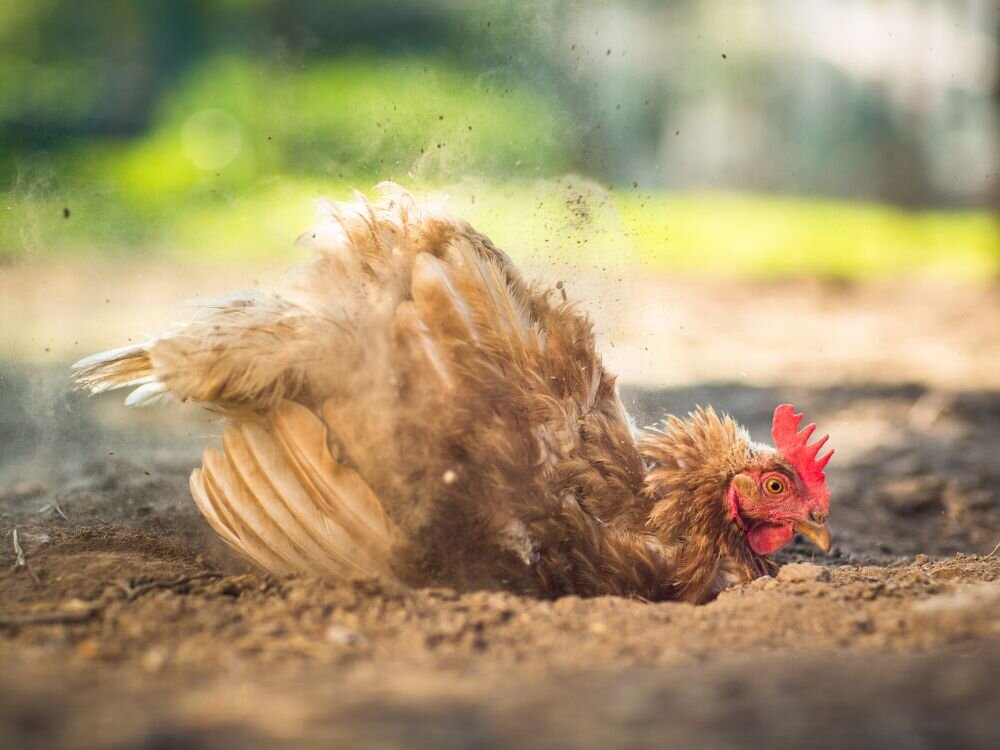
A chicken dust bath might look like a pile of dirt, but for your flock, it’s part of their daily routine.
What Is a Chicken Dust Bath?

A chicken dust bath is a dry, loose area where chickens roll, dig, and toss fine material (like soil or sand) through their feathers. It might look messy, but it’s one of the most important parts of keeping your flock clean and healthy.
So if you’ve ever seen a chicken lying on its side, flapping and kicking dirt everywhere, it’s not in distress. It’s just taking a very effective, very necessary “bath.”
Why Chickens Need Dust Baths
Dust bathing is a natural behavior that supports their health, comfort, and daily routine.
- Helps control parasites – Dust settles on the skin, where parasites like mites and lice tend to live. As chickens move and shake, the fine particles help dry out the environment these pests depend on.
- Keeps feathers clean – Chickens use dust the way other animals use water. It lifts dirt, absorbs excess oil, and helps prevent feathers from clumping or becoming greasy.
- Supports natural behavior – Dust bathing is instinctive. Chickens will seek it out on their own, even if that means digging a shallow spot in your yard.
- Promotes flock well-being – When chickens can’t dust bathe, it shows. They may become restless, uncomfortable, or start overgrooming.
Giving them a dedicated dust bath area helps reduce that stress and supports a more relaxed, balanced flock.
What To Put in a Chicken Dust Bath
The best chicken dust bath ingredients are simple, dry materials that break apart easily and move through feathers.
Here are the most common options:
- Dry soil is the base for most dust baths. It’s easy for chickens to dig into and holds just enough texture to work through their feathers.
- Sand helps keep the mix from clumping. It also adds a slightly gritty texture that helps lift dirt and oils.
- Wood ash (from untreated wood) is very fine and dry, making it great at absorbing moisture. It also helps discourage pests. Just make sure it comes from clean, untreated wood.
- Diatomaceous earth can be added for extra pest control. If you use it, avoid overdoing it, since it can be irritating in large quantities.
In most cases, a mix of materials works better than using just one. Combining soil and sand creates a balanced base, while small additions improve how well the dust bath absorbs moisture and supports parasite control.
If the texture feels light, dry, and easy to sift through by hand, you’re on the right track.
Chicken Dust Bath Recipe
Try this simple blend:
- 2 parts dry soil → forms the base and makes it easy for chickens to dig and roll
- 1 part sand → keeps the mix loose and helps prevent clumping
- Optional: wood ash (about 10–15% of the total mix) → adds extra dryness and helps with pest control
- Optional: small amount of diatomaceous earth (about 5% or less) → optional boost for parasite control (use lightly)
For example, if you’re mixing a small batch, you could use:
- 2 scoops of soil
- 1 scoop of sand
- ¼ scoop wood ash
- a small handful of diatomaceous earth
That keeps the texture light and dusty without overloading the mix.
A Note About Soil
For the soil, you want something loose, dry, and additive-free. Here’s what to look for:
- Plain garden soil or topsoil – this is the easiest option and works well as a base
- Soil from your yard – fine as long as it’s dry and not too clumpy
- Sandy or loamy soil – ideal because it stays light and easy to move
If your native soil is heavy (like clay), just mix in sand to loosen it up and improve the texture. The simple rule is if you can grab it and it falls apart easily in your hand, it’s a good fit.
What to avoid:
- Potting soil with fertilizers or chemicals – not meant for chickens and can irritate skin
- Soil with large chunks, rocks, or mulch – makes it harder for chickens to dust properly
- Damp or compacted soil – won’t break apart or absorb oils effectively
How to Make a Chicken Dust Bath

A good dust bath starts with two things: location and materials. Get those right, and the rest comes together quickly.
Step 1: Pick the Right Location
A good location keeps the dust bath usable and appealing to your chickens. Covered areas or spots with good drainage work best.
Keep these tips in mind:
- Place it in a dry area – moisture will ruin the texture and make it less effective
- Partial shade works well – helps keep chickens comfortable, especially in warmer weather
- Keep it inside the run if predators are a concern – gives chickens a safe place to bathe
- Keep it away from waterers – prevents splashing and keeps the mix dry
Step 2: Choose a Container (Optional)
You can create a dust bath directly on the ground or use a container to keep things contained.
The best option depends on your coop layout and the number of chickens you have. Smaller flocks can share compact containers, while larger groups benefit from wider, open areas where multiple birds can dust bathe at once.
Common options include:
- A shallow wooden box – easy to fill and move if needed
- An old tire – holds shape well and keeps materials in place
- A plastic storage bin – works well in covered coops or smaller spaces
- Shallow kiddie pool – great for larger flocks that like to bathe together
- Dedicated sand pit area – works well if you have space for a permanent spot
Using a container also helps keep the mixture from spreading and makes it easier to refresh.
Step 3: Add Dust Bath Ingredients
Aim for a few inches deep so chickens can dig, roll, and fully coat their feathers. This gives them enough material to work with while bathing.
Step 4: Introduce Chickens to the Area
Most chickens will find it on their own. You might notice them scratching at it first, then settling in and rolling around. Once one chicken starts, the rest usually follow.
Can Chicks Use Dust Baths?
Yes, chicks can use a dust bath, and many will start showing interest at a young age. You might notice them pecking, scratching, or even trying small dusting motions early on.
For chicks, the key is to keep everything soft and fine:
- Use very fine soil or sand – easier on their skin and feathers
- Avoid large debris – sticks, rocks, or rough materials will get in the way
- Keep the texture light – helps them move the dust through their feathers without effort
A small container works best for young birds. Something shallow, like a tray or low-sided bin, gives them enough space to explore without overwhelming them. As they grow, you can gradually transition them to a larger dust bath setup with the rest of your flock.
For more help on what your baby chicks need, read Chick Checklist: What to Do Before You Bring Chicks Home.
How to Maintain a Chicken Dust Bath
A dust bath only works if it stays clean and dry.
- Replace wet material – moisture causes clumping and reduces how well the dust absorbs oils.
- Remove droppings – keeps the area sanitary and more inviting for chickens to use.
- Refresh ingredients occasionally – about every 1–2 weeks for most flocks.
A quick check every few days goes a long way. If it still feels loose and dusty, you’re in good shape. If the mix starts to feel damp, heavy, or compacted, it’s time to replace or refresh it.
Signs Your Chickens Are Enjoying Their Dust Bath

Dust bathing looks a little chaotic, but it’s actually a great sign that your chickens are happy and comfortable.
Here’s what you’ll usually see:
- Rolling onto their side – they’re getting dust deep into their feathers
- Kicking dust into their feathers – helps coat their skin and remove oils
- Lying still with wings spread – gives the dust time to settle and do its job
- Shaking off dust afterward – clears out loose dirt and finishes the process
You might even notice them closing their eyes or staying in one spot longer than expected. They’re not stuck, but relaxed. And these kinds of behavior are a strong sign of a healthy flock.
Give Your Chickens What They Naturally Need
A good dust bath does not need to be complicated: It just needs to stay dry, loose, and easy for your chickens to use.
If you have not added one yet, this is one of the simplest upgrades you can make for your chickens. It supports cleaner feathers, better comfort, and a healthier flock overall.
Visit your local Wilco Farm Store or shop online to pick up everything you need for your flock, from dust bath materials to everyday care essentials.


Store Hours
Monday - Saturday 7am - 8pm, Sunday 9am - 6pm

For questions or help with online orders call: (888) 78-WILCO
Limited to stock on hand. Some items may vary from photos. Because of store size limitations or geography, some items featured may not be available in all stores but will be made available by special order during sale periods at advertised prices. All sale prices listed as “dollars off” or “% off” are discounted from our regular posted shelf price, not from discounts given with specialty, bulk or pallet pricing. Reseller and Drop-shippers must contact us for pre-approval to place orders with the intent to re-distribute.
© 2026, Wilco Farm Store